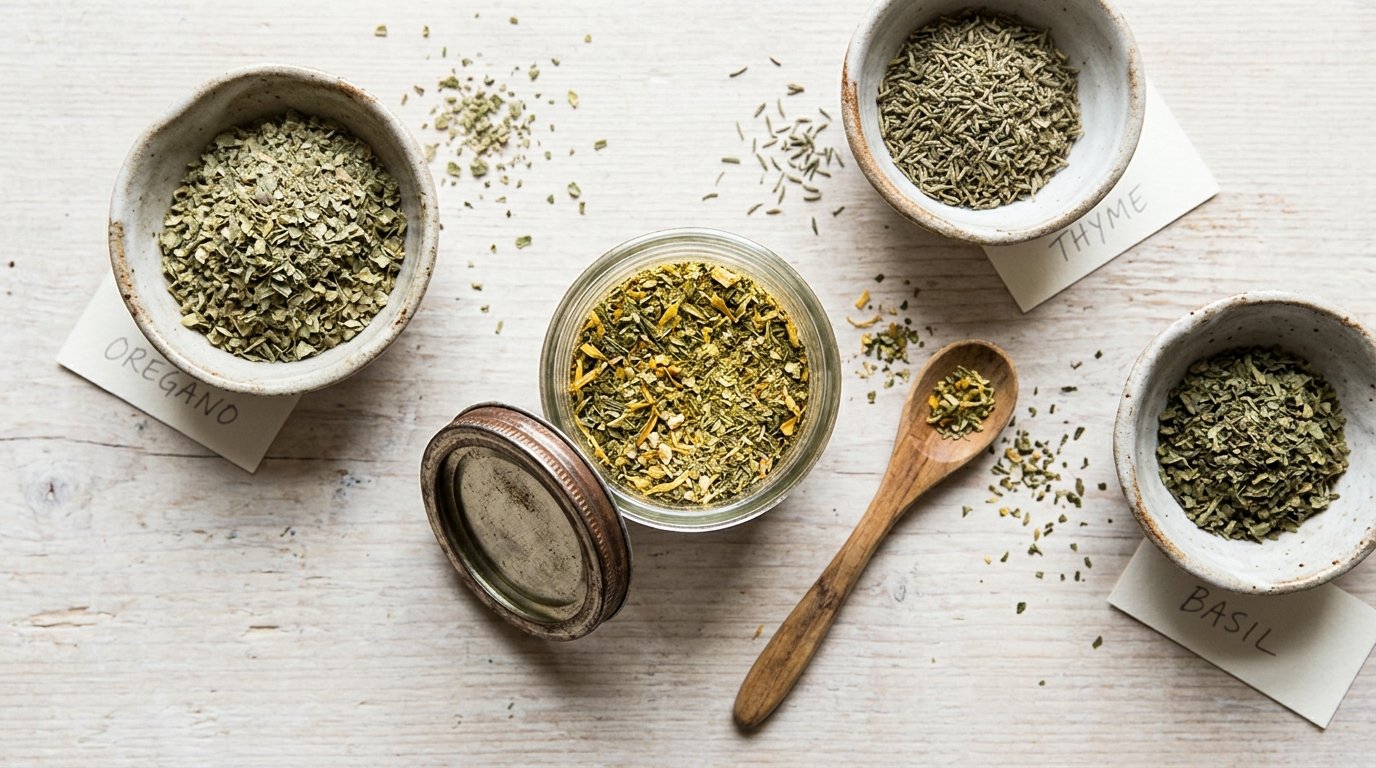
Italian seasoning without marjoram isn’t the compromise it sounds like. Picture this: you’re halfway through a pot of marinara, and the marjoram jar is empty. Or maybe you’ve never loved its sweet, floral taste. Either way, you don’t need a special trip to the store. Most pantries already hold everything required to mix a balanced blend in about five minutes.
In this post, you’ll learn exactly what marjoram does in a blend and which herbs can take its place. Then I’ll walk you through a simple recipe with clear ratios, so you aren’t guessing at the spice rack. Additionally, there will be storage information, easy methods on how to use the paste, and remedies for an out-of-flavor paste. In the end, you will have a paste that can be used in pizza, pasta, soup, and roasted chicken.
What Marjoram Actually Does in an Italian Blend
The last ingredient on our list is the marjoram. This herb is like a humble little brother of oregano; it is sweeter and softer in its aroma. It can be called an additional herb. On one hand, in a store-bought jar it is hidden behind other herbs and helps to keep the taste of the blend gentle and mild. This is the reason why you may notice its presence only after it is missing.
What difference will there be if we remove it? Not too big. Marjoram adds very subtle taste notes to the blend – sweetness. It is not hard to replace it and to make up for its absence. The main point is to get another balance. Some chefs even enjoy this additional sharpness in pizza or tomato sauce.
Best Marjoram Substitutes for Homemade Italian Seasoning
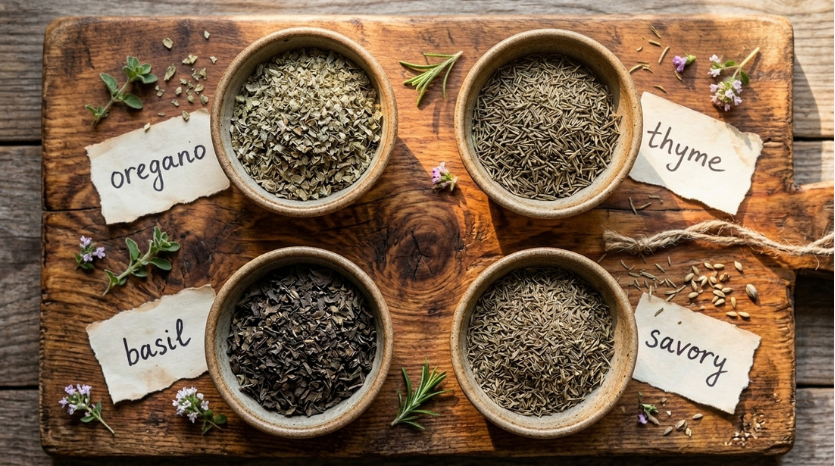
Not all exchanges are equal, so it is useful to tailor your choice of herb to what you are preparing. Marjoram has a gentle, sweet taste, so good substitutes include family members and herbs with a similarly delicate nature. You’ve got several solid marjoram substitutes, and most are probably already in your cabinet. Each one shifts the flavor in a slightly different direction. Here’s how to use them.
Oregano and Thyme, the Easy Swap
Replacing marjoram with oregano is simple because oregano is related to marjoram. Oregano has a stronger taste and even a slight peppery taste, therefore, should be used in smaller quantities. To tone down its taste, add thyme as it has a subtle earthiness and a slightly lemony flavor. Both these ingredients will replace most of the flavors of marjoram.
Savory, Basil and Tarragon for a Sweeter Note
When marjoram’s sweetness is missed, then basil should be used as a substitute. Basil is not as pungent as marjoram, so it should be added slowly to make sure there will be no problems when putting the seasoning into the container. Another herb that can be considered is summer savory because of its subtle piquant note. The use of tarragon is possible as well, but in moderation due to its pronounced aniseed flavor.
Fresh vs. Dried Substitutes (Conversion Tips)
Herbs, when fresh and dried, cannot be substituted one for one. Three times more fresh herbs than dried herbs can be used since fresh herbs have a mild flavor compared to their weight. One tablespoon of fresh, chopped oregano is equivalent to one teaspoon of dried. Another factor that should not be forgotten is that fresh herbs contain water, and that may play an important role when storing the mixture in a jar.
Italian Seasoning Without Marjoram Recipe
This Italian seasoning without marjoram recipe uses six ingredients and takes about five minutes. You’ll measure everything in tablespoons, so there’s no scale or fancy equipment involved. The blend leans on oregano and basil for the classic pizza-parlor flavor. Thyme will take care of replacing the sweet taste of marjoram, whereas rosemary and parsley will cover the rest. Moreover, this blend lacks salt, giving you complete control over the quantity of salt used.
Ingredients and Ratios for a Marjoram-Free Blend
Here’s the ratio I’d start with.Mix three tablespoons of oregano, three tablespoons of basil, and two tablespoons of thyme. Then add one tablespoon of rosemary, one tablespoon of parsley, and one teaspoon of garlic powder. This will give you approximately two-thirds of a cup of the mix. If you like it hot, then you can add some red pepper flakes. Remember to crush the rosemary because its leaves are quite pointed.
How to Mix and Jar the Blend
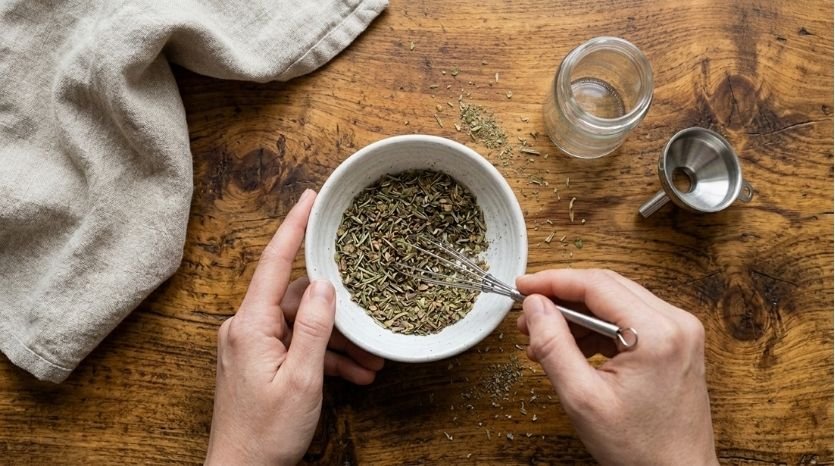
Simply pour the herb mix into a bowl and mix it for around 30 seconds. As you put the herbs in, crush them gently in your hands to bring out their oils and awaken their flavors. After that, you simply pour the mix into a jar using a funnel. Shake well, label with the date, and that is it. Allow it to rest overnight if possible.
How to Store Your Homemade Blend
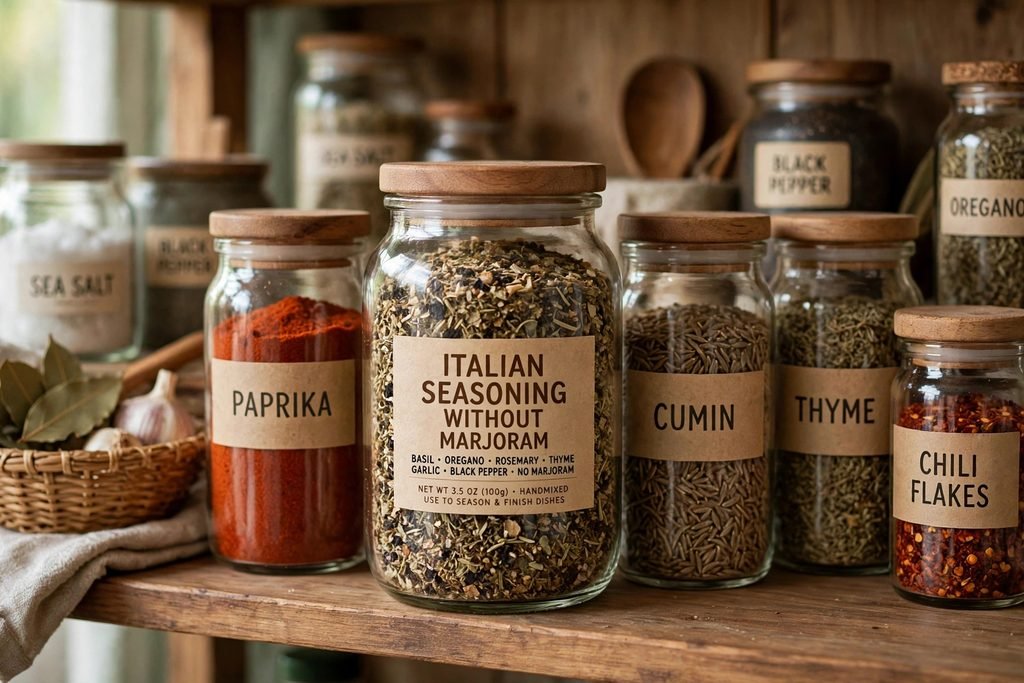
Seal the mixture into an air-tight glass jar, with its lid firmly on. Keep it at a place which is cool and dark, like away from the cooking stove and from the sunny windowsill. Heat, light and moisture are the three factors that will turn the herbs dull the quickest. In case you are keeping the herbs in a clear jar, then it should be placed in a dark kitchen pantry. Do not ever put the jar above the hot boiling pots since steam will enter the jar and make the herbs sticky. If it is well-stored, the mixture will taste its best for a year.If it smells like dust, mix a fresh batch. Since this recipe makes roughly two-thirds of a cup, a new jar only takes a few minutes.
Ways to Use Italian Seasoning Without Marjoram
Wherever you can take a purchased jar, take this one as well. When making marinara or pizza sauce, stir in a teaspoon while it is simmering to allow the flavors to soften and bloom. Sprinkle it in your olive oil when dipping bread. Mix it with your roasted potatoes and vegetables before putting them in the oven. You can even use it when making vinaigrettes, starting with small amounts and adding more depending on how the dish tastes.
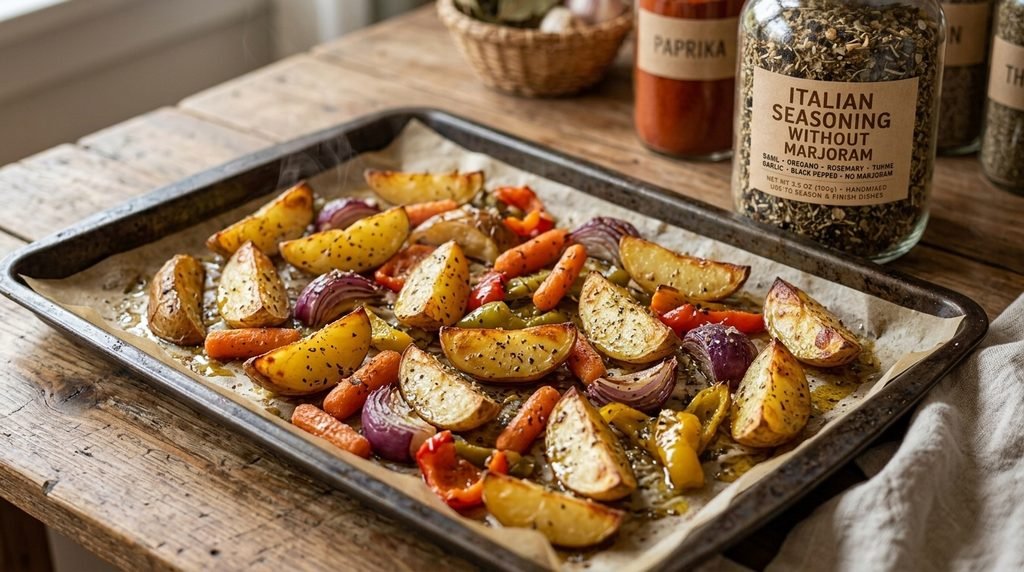
This blend also works well with meat and cheese dishes. Season with salt and oil before roasting chicken thighs. Add a spoonful to ground beef for meatballs and meatloaf or add it to your ricotta cheese for stuffed shells. When using it in soups, be sure to add it early to allow the herbs time to soften. Since this marjoram-less blend does not have any salt, season individually.
Common Mistakes and How to Fix the Flavor
The most common mistake is using too much rosemary. It’s strong and piney, and a heavy hand can make the whole jar taste like pine needles. Another slip is using old herbs.Anywhere you would bring along your purchased jar, bring this one too. While you are cooking your marinara or pizza sauce, add it in a teaspoon as it is simmering to let its flavor mellow out. Put it in your olive oil that you are using as a dip for your bread. Use it in your roasted potatoes and vegetables before putting them in the oven. Even vinaigrettes will turn out well when made with it, using it in small quantities and increasing it as per requirement.
This herb mix also makes for a great seasoning for meat and cheese dishes. Use it with salt and oil in your roasted chicken thighs. Use it in your ground beef in the making of meatballs and meatloaf or ricotta cheese to stuff your shells. In soups, use it early to give time to your herbs to mellow. Since this marjoram free mix does not contain salt, use it individually.
FAQs About Italian Seasoning Without Marjoram
Can Italian seasoning be made without marjoram?
Sure, because marjoram is a sweet, gentle herb, omitting it doesn’t change the flavor of the seasoning mix noticeably. Just combine dried oregano, basil, and thyme with small amounts of rosemary and parsley. Most cooks will not even notice it’s absent when used on tomato sauces, pizza, or roasted vegetables.
What herbs can I substitute for marjoram in Italian seasoning?
The closest substitution would be oregano, which is spicier than marjoram. Thyme and basil will add gentle earthiness and mild sweetness to your mixture. Another suitable herb for that blend would be summer savory. Start with small amounts and adjust the proportions as needed.
Is marjoram-free Italian seasoning authentic?
If you are talking about authenticity of Italian dishes, probably not. However, it is authentic enough for everyday use. Italian seasoning is not an authentic Italian mixture, but an American creation, and each cook prepares it differently. The ingredients may vary from one brand to another, so if your blend tastes good, it’s all right.
Is oregano a good substitute for marjoram?
Oregano is definitely the best choice as a single ingredient substitute. These herbs belong to the same family, but oregano is spicier. Use half to three-quarters of the amount of marjoram mentioned in the recipe. Add some basil or thyme to restore its sweetness.
How long will the homemade seasoning last?
If stored in an airtight container in a cool and dry place, it will stay fresh for up to a year, after which it will start losing its flavor. To determine whether your seasoning still fresh enough, rub a bit in your hands. It should smell herby. Dusting means it’s time to prepare a fresh blend.
Can I make it with fresh herbs if no marjoram is available?
No, as fresh herbs contain moisture that leads to molding and clumping. However, you can use fresh herbs for preparing dishes with your seasoning mix, but keep in mind that you will need three times more than if you used dried herbs. Add basil and other tender herbs toward the end of cooking.
Final Thoughts on Italian Seasoning Without Marjoram
A missing jar of marjoram doesn’t have to stall dinner. With oregano, basil, and thyme doing the heavy lifting, you can mix a full jar in minutes.The ratios are all under your control, no salt is needed, and you know exactly what’s going into your jar.
Therefore, take your spice box and whip up a batch to sample. Experiment with the ratios and find out what works for you. This week, add some of your Italian seasoning without marjoram to your pizza or pasta and tell me about it in the comments section.