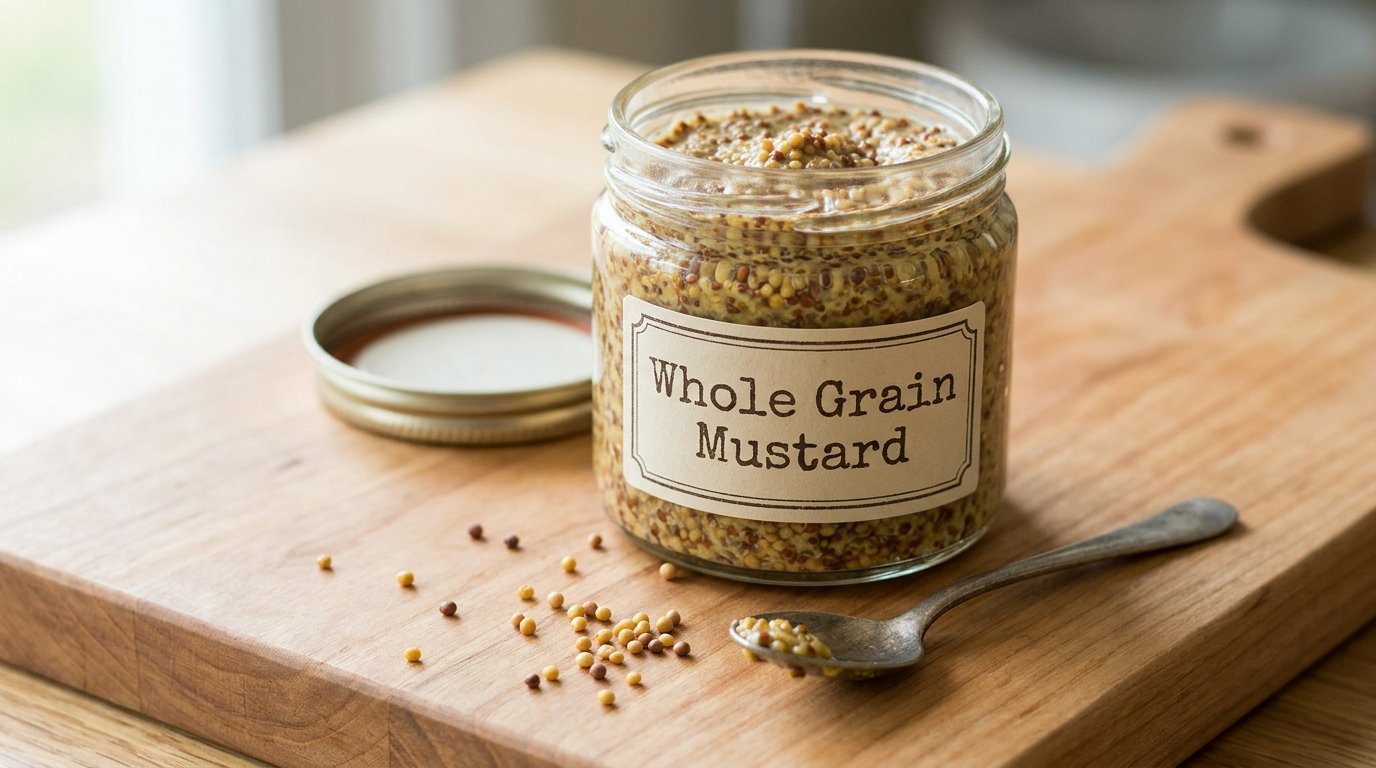
Although making your own wholegrain mustard may sound like a large task, there isn’t much effort involved. Simply mix your ingredients together, leave to do its magic and voila! It can be very bland compared to shop bought jars, you have no control over the salt and sweetness. Once you have made your own and added to your ham sandwich, the shop bought jar will seem very average. Plus most of the work only takes a few minutes!
You will learn why using two different kinds of mustard seed works best, how long to soak them for, how to get the perfect consistency, how to stop them tasting bitter and how to add extra flavours such as beer or honey. We will also give you some top tips on how to store your mustard and easy ways to use your jar. In no time you will have a jar that will taste like it has come from a specialist shop!
What Is Whole Grain Mustard and Why Make It at Home?
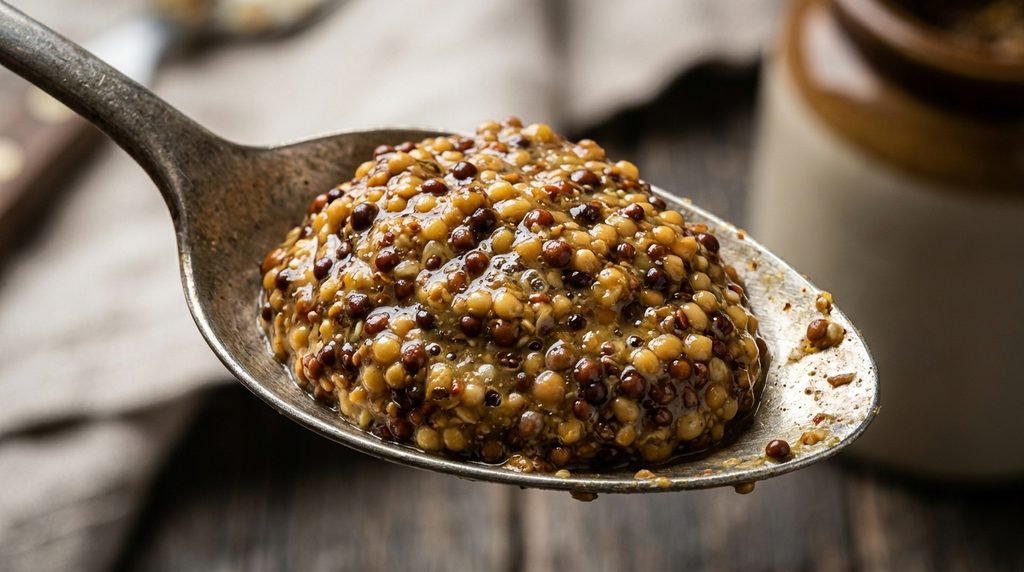
Wholegrain mustards are thick, chunky mustard varieties that contain lots of whole or partially crushed mustard seeds. The seeds create a nice crackly texture and every spoonful has a gentle tanginess. This type of mustard is a traditional recipe used by French chefs, and many specialist jars are available that replicate this style.
Why make your own? Well, you can customise your mustard to how salty and sweet you want it. Store bought jars have a set amount of salt and sweetness whereas you can make it as sharp or mild as you wish. It is also very easy to make as the seeds will soften whilst you do something else. A jar of wholegrain mustard with seeds is a lovely gift to give someone!
Ingredients for DIY Whole Grain Mustard With Seeds
This is a short list of ingredients. You will likely have half of them already. You will need whole mustard seeds, vinegar, water, salt, and a tiny bit of sweetener. Although the ingredient list is short, each item serves a purpose and there are some considerations to take into account when choosing these items. Below you will find the breakdown of what seeds, liquids and finishing touches you will need.
Yellow vs Brown Mustard Seeds

Most recipes will use both, and this is for a reason! The yellow seeds are more mild and provide a nice body and sharpness to your mustard. Whereas the brown seeds provide more heat and a more intense, earthy flavour. Combining both provides a balance. You can start by using equal amounts of both. If you can only get one type then you can still make a batch, although it won’t have the same flavour.
Vinegar, Liquid, and Sweetener
Use a good quality vinegar. Apple cider or white wine vinegar both work well. You’ll need some water to help the seeds plump up but you can add some beer or wine to give it some extra depth. A spoonful of honey or maple syrup will give it some sweetness. Add a little at first and then adjust after the mustard has had chance to settle.
Salt and Optional Flavorings
Salt will help to give it more depth and balance the sharpness of the vinegar. Kosher salt or fine sea salt will work well. If possible try to weigh your salt so that you can be sure how much you’re using. Different salts have different densities. A pinch of turmeric will give some colour, or you could try adding some garlic or herbs. Keep things simple to begin with.
How to Make Whole Grain Mustard Step by Step
With just 3 steps you can make your own wholegrain seed mustard. This isn’t complicated so don’t worry. However, if you rush this step or skip the resting time then it is very common to get a bitter first batch. All you will need is a glass jar/bowl, spoon and a blender/food processor. The timings are important here rather than the actual method itself.
Soak the Mustard Seeds
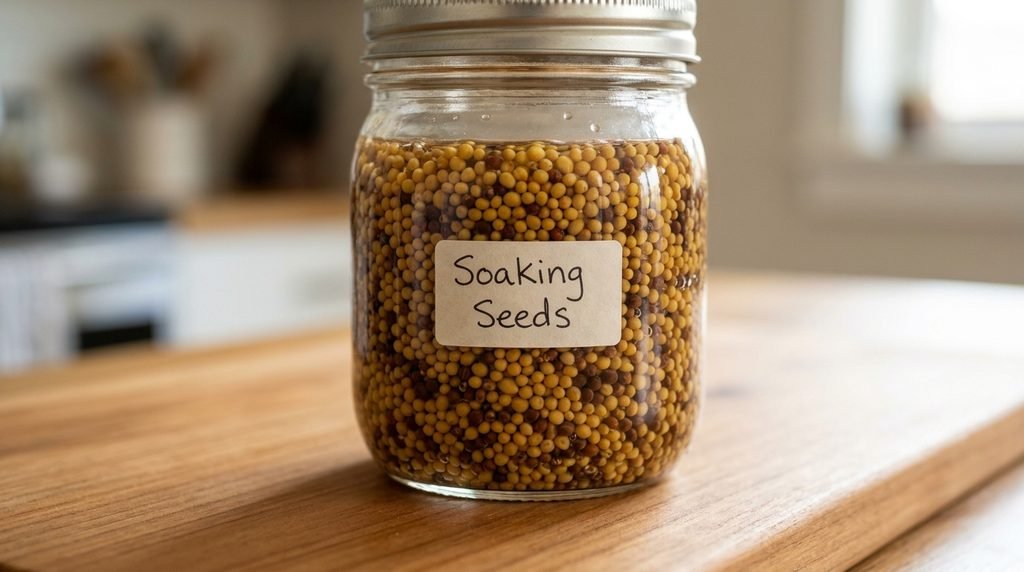
Mix the yellow and brown seeds with the vinegar and water in a glass jar or bowl. The seeds should be covered with a little extra liquid, as they will soak it up. Seal the jar and leave on the counter, away from direct sunlight. Depending on the recipe you are using, leave to infuse for 1-2 days. The seeds should be swollen looking and have soaked up most of the liquid. Give them a stir once or twice and if you notice the surface is looking dry add a little extra liquid.
Blend for the Texture You Want
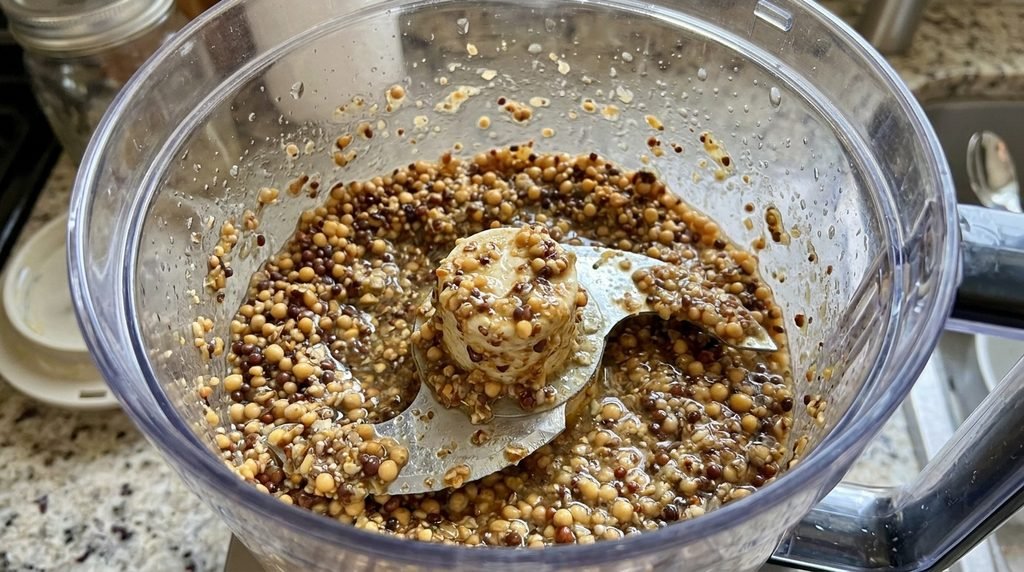
Add salt and sweetener. Turn the blender on for a few seconds at a time, stopping to check consistency. After a little while you’ll have a coarse, grainy mustard with lots of seeds in it. The longer you run the blender, the smoother and thicker it will be. If it looks too thick, add 1 tsp of water or vinegar and stir to make it flow better.
Rest and Mellow the Mustard
Spoon into a sterilised jar and put in the fridge. Don’t worry about the taste at this point, freshly blended mustards can be quite harsh and slightly bitter but they will mellow out over time. Leave the mustard for 2-3 days and then decide if you want to add any extra salt, vinegar or sweetner. The taste of the mustard will become more rounded and the heat will subside.
Flavor Variations for Homemade Whole Grain Mustard
Once you have a basic recipe, you can begin experimenting. This base can easily be adapted. You can switch up the liquid, add some sweetness or add a strong ingredient right before blending. It can be easy to forget which one you really liked so take notes. Here are 3 recipes to try out first. They can all be soaked using the same method.
Beer or Wine Whole Grain Mustard
Replace some of the water with beer or dry white wine. Malty beers such as amber ale will give a nice rich slightly sweet taste. Don’t use highly hopped beers as they can be too bitter and won’t go well with the seeds. Dry white wines will give a more zesty taste and will work well with chicken or fish. As it is not being cooked there may still be some alcohol present so make sure to label your jar if you are sharing.
Honey or Maple Whole Grain Mustard
A sweet mustard will work well on your ham sandwich. Increase the amount of sweetener slightly by using a larger spoonful of honey or maple syrup. Maple syrup will add a warm and woody sweetness. Honey will give a flowery and smooth sweetness. Use small amounts. You can easily overdo it. If you have added too much sweetness you can add a dash of vinegar to bring it back into balance.
Horseradish or Herb Whole Grain Mustard
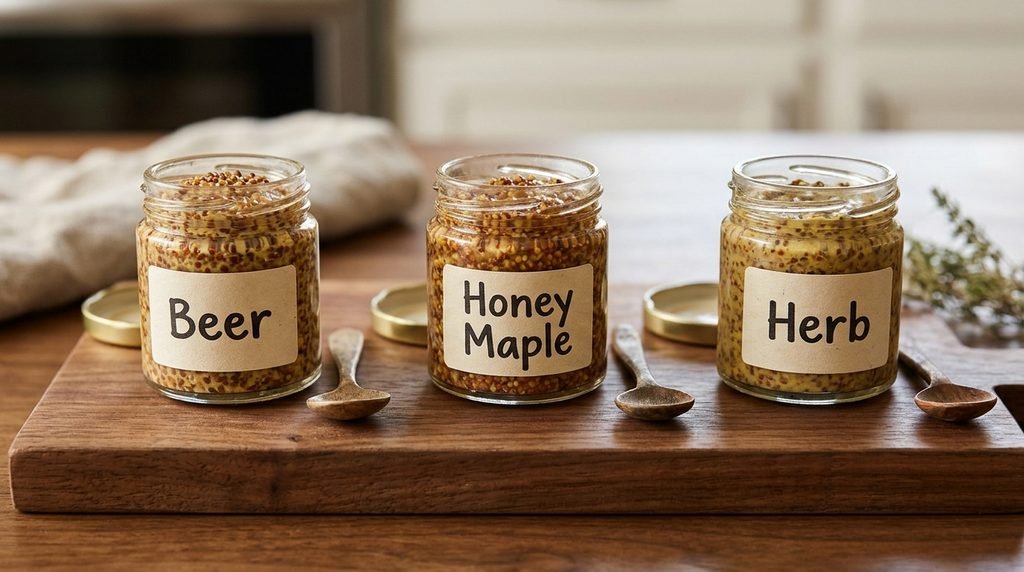
For extra flair, add a spoonful of prepared horseradish for a punchy, clearing sinus kick. Use fresh herbs like tarragon which pairs well with mustard, or fresh chopped chives and thyme. Add to your mix once you’ve blended everything together to keep it vibrant. Using fresh herbs may reduce the shelf life so make a little more to use up quicker.
Troubleshooting Homemade Mustard: Bitter, Runny, or Too Hot
Most issues with making mustards come down to time, texture and flavour balance. If your mustard is bitter then give it some time to mature. You may find that it needs to sit in the fridge for a couple of days first so that the tartness mellow out. If after a week it’s still bitter you can add a pinch of salt and a bit extra sweetener. Just add a little at a time.
Texture issues are easily fixed. If it is too runny just leave it for a day or give it a couple of extra pulses. If it is too thick add 1 teaspoon of vinegar or water and give it a good stir. If it is too hot give it extra time in the fridge, or add a little honey and give it a good stir. Small changes like this will often save your batch.
How to Store Homemade Whole Grain Mustard
Transfer your made mustard to a clean airtight glass jar and store it in the fridge. Although the vinegar and salt will act as a preservative, storing it in the fridge will ensure that the taste doesn’t change. Before filling your jar make sure it has been washed in hot soapy water and completely dried. Any excess moisture or crumbly residue can reduce the shelf life.
Always use a clean spoon to scoop out some mustard. Double dipping is the fastest way to get bacteria into your mustard. Your mustard should last several months however often the taste will continue to mellow. If you see any mould, or a sour/off smell or any strange colour changes then it is best to throw it away. If you’re unsure it is best to make a new batch.
Ways to Use Whole Grain Mustard
Once you’ve got this jar in your fridge you will be reaching for it more than you think! It can be used as a condiment, flavouring and even a secret ingredient. It has a nice chewy texture due to the seeds remaining whole. A little goes a long way so start with just a teaspoon and add more to taste. Here are 3 easy ways to get started:
On Sandwiches and Burgers
Just spread it directly onto some bread. Wholegrain mustard is amazing on ham, roast beef and turkey sandwiches. It’s good on burgers and hot dogs too, the mustard seeds make it nice and crunchy. Mix with some mayonnaise for a creamy but punchy spread. This simple addition makes your basic lunches much more exciting!
In Dressings, Marinades, and Glazes
Mustard is a natural emulsifier. Whisking a spoonful of mustard into a basic vinaigrette will give you a much silkier and more tangy dressing. It also works well in marinades. As it sticks to the meat, it’s great to marinate chicken or pork with. A quick glaze can be made by mixing with some honey and brushing onto salmon or roasted carrots before cooking.
On Cheese Boards and Roasted Vegetables

Serve as a dip for cheese, coldcuts and crackers in a small bowl. It works particularly well with strong cheddar or gruyere. Mix roasted potatoes or Brussels Sprouts with a big spoonful once they have come out the oven. The heat will mellow the taste slightly and the seeds add a nice crunchy texture. A quick way to elevate simple accompaniments.
FAQs About Making Whole Grain Mustard at Home
How long does DIY whole grain mustard with seeds last in the fridge?
You can store in a clean airtight glass jar in the fridge for several months. The vinegar and salt act as preservatives. Always use a clean spoon. If they start to develop any mould or smell, just give them a good stir. If they have fresh herbs they will not keep as long.
Can I make whole grain mustard with only yellow seeds?
Yes. Using only yellow seeds will give you a lighter, tangy mustard that is less hot. If you use brown seeds there will be more of a sharp, savoury taste. To make it hotter add some prepared horseradish after you have mixed everything.
Why does my homemade mustard taste bitter?
Freshly made mustard can be quite sharp. However, if kept for a few days in the fridge this will mellow out. If the taste is still bitter after a week, add a pinch of salt and a little bit of honey or maple syrup. Taste as you go.
Do you have to soak mustard seeds before making mustard?
Yes. The seeds are quite hard, so you need to soften them by soaking them in either vinegar and water for a day or two. If you do skip this bit then they will be very tough and gritty and have a very strong taste.
What’s the difference between whole grain mustard and Dijon?
Wholegrain mustard has a chunkier texture and a gentle tangy taste due to the seeds remaining whole. However, Dijon mustard is smoother and made using brown seeds. It has a sharper, more winey taste. Both are great for dressings and sandwiches but wholegrain will give a crunch. Dijon will mix in more smoothly.
Final Thoughts on DIY Whole Grain Mustard With Seeds
This recipe requires some patience but very little skill. Soak your seeds, blend to your desired consistency and pop it in the fridge. The mustard will only need to sit for a short period of time so that it goes from being tangy and slightly bitter to smooth and well balanced. Then you can season to your liking.
Make a batch this weekend and you’ll have some sandwich friendly mustard by midweek. Try one of the variations below and let me know which one you tried in the comments below. You may be surprised by your favourite!