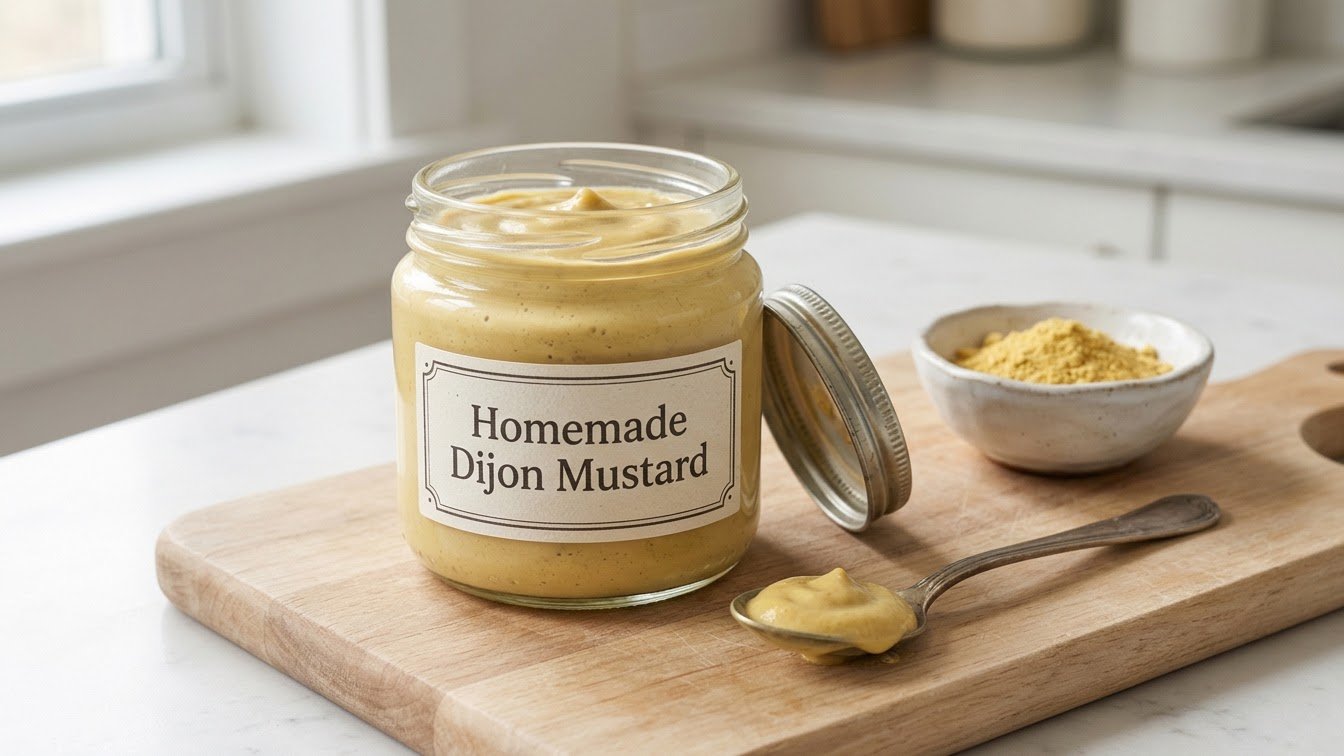
If you’ve run out of Dijon mustard in the middle of a recipe, this homemade Dijon dry mustard is perfect! It only requires a couple of ingredients, a pan, and a whisk. It has a zingy, tangy and creamy taste. Compared to store bought varieties, it has a fresh and vibrant taste. Plus, you can customise it to your liking!
You’ll also learn why mustard powder is a great option for making Dijon mustard, which ingredients to include (and why), and how to cook, whisk and let it mature in the fridge. If your mustard has gone bitter, too runny or too spicy, don’t worry! This post includes some solutions to these problems. Finally, I’ll explain how to store this mustard, and a few ideas on what to do with any leftover in the jar.
Why Dry Mustard Powder Makes Homemade Dijon Mustard Easy
As this mustard is made from brown seeds, this must be soaked, blended and filtered. As this powder is very fine, there is no need to soak, blend or filter. This makes it quick to make, with no long soaking periods. This means that if you need to make a jar of mustard quickly, you can do so the same day. The powder can be stored in a tin in a dark place meaning that you’ll always have some on hand.
Controlled Heat depending on what you combine this mustard with will affect how ‘hot’ it is. Using cold water produces a very hot mustard. However, using acidic ingredients (wine and vinegars) will reduce the heat and create a more stable flavour. With this dry mustard powder for homemade dijon mustard, you can create either a very mild or hot mustard. In this recipe, the wine, vinegar and flavourings are reduced down, so that by the time we add the mustard powder it is at room temperature.
Ingredients for Homemade Dijon Mustard
The ingredients needed for this recipe are very few. You will just need mustard powder (be sure that it is plain ground mustard without any added ingredients in), some dry white wine, white wine vinegar, onion, garlic and salt. To give it a slightly milder taste you can also add a little sugar or honey. Be sure that you have plain ground mustard in the packet.
The Core Pantry Ingredients
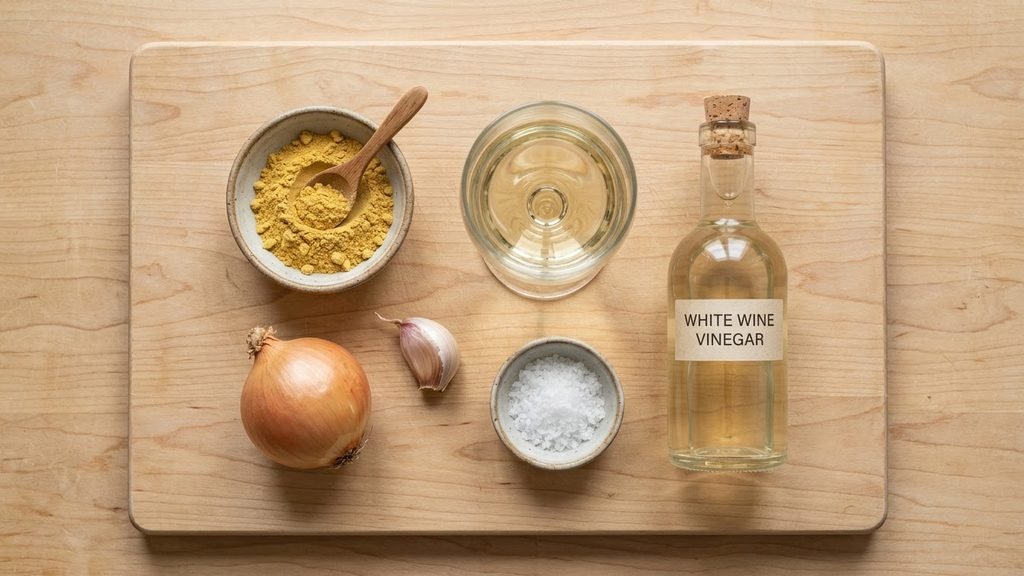
Mustard powder will give some depth of flavour. White wine, adds the traditional Dijon flavour. To add more acidity, white wine vinegar can be used. A finely chopped onion and crushed clove of garlic can be cooked down with the liquids to add some savoury notes to the sauce. Remove the onion and garlic. Salt is very important in this sauce to balance out the spice. Finely ground salt can be used to ensure it all dissolves.
White Wine Substitutes That Still Taste Right
Alternatively, dry vermouth can be used. To create a non-alcoholic version add a bit of white wine vinegar to water so that there is a nice sharpness. Add some fresh lemon juice. Avoid sweet wines as this will make your mustard more of a honey mustard. It is a good idea to try the liquid at this stage to get a feel for how your mustard will taste.
How to Make Dijon Mustard from Mustard Powder
This is quite quick to make (with cooling time in the fridge). Simply combine the wine, vinegar, onion and garlic and bring to a simmer. Then strain and add to the mustard powder. For the basic quantity, mix together 1/2 cup dry white wine, 1/4 cup white wine vinegar, 1/4 cup finely chopped onion, 1 crushed garlic clove, 1/2 cup ground mustard and 1 tsp salt. This will make around 3/4 cups of mustard. If you want to make more to give away in jars, just double the quantities. Once you have gathered all your ingredients, this recipe moves very quickly!
Simmer the Base
Add the wine and vinegar to the pan with the onion and garlic, gently simmer for 8-10 minutes, by which point the liquid should have reduced by one third. It will be quite pungent with a hint of sweetness. Pass the mixture through a fine strainer and press down on the onion to extract as much liquid as possible. Allow the sauce to cool slightly to just warm, as leaving it too hot may cause the bite of the mustard to be lost.
Whisk in the Mustard Powder
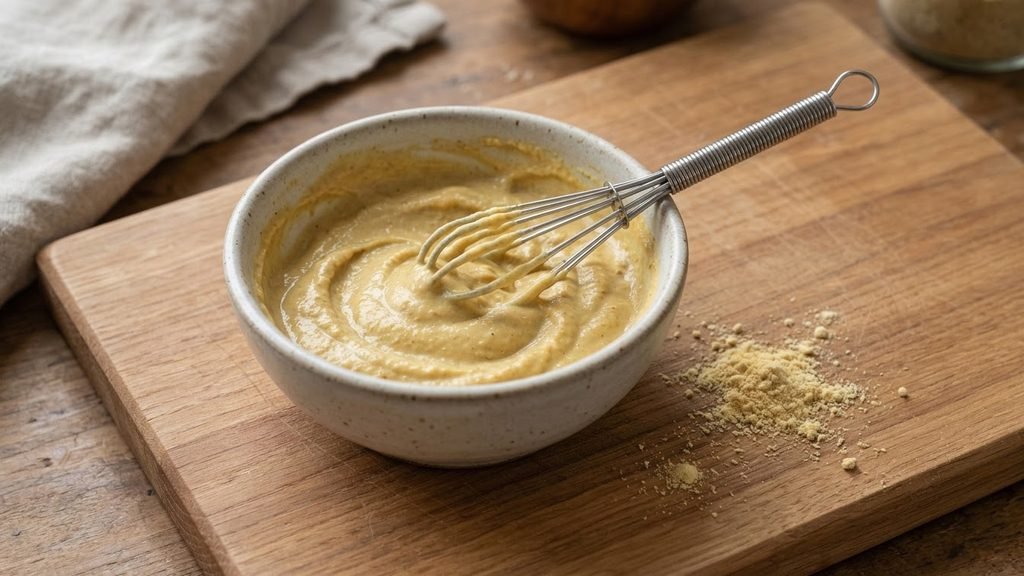
Sieve the mustard seeds and salt into a small bowl. Add ½ of the cooled liquid and whisk together. Add in further quantities of the mixture a spoon at a time to make a fairly thick paste (similar to Greek yoghurt). If it becomes too firm, add 1 tsp of water at a time and whisk to combine. Taste the sauce. It will be quite sharp and bitter but this should improve once you’ve let it sit for a while.
Let It Mellow in the Fridge
Screw the lid on the jar and place in the fridge to mature. Ideally leave it to mature for 2 or 3 days, although a minimum of 24 hours is fine. The mustard will be very sharp and bitter when first made, but should mellow over time. After 2 days, you should find that it is a smoother, tangy mustard with a nice bite. Mix well and taste. If it still has a sharp taste, leave for another day or 2.
Fixing Bitter, Runny, or Too-Hot Dijon
To make it less sharp add a little honey or sugar. If it is too spicy, leave to mature for a few days. After this if it is still too spicy, add a little vinegar and a little honey. Be sure to check regularly to ensure you are not over balancing.
If you have the wrong texture, simply add more dry mustard powder at any point. If it is too liquid, simply add 1 teaspoon of dry mustard powder and allow the jar to sit for a while. As it sits, the dry mustard powder will thicken the mixture. If it is too thick, add 1 teaspoon of water (or wine) to thin it. If there are clumps in your mustard, press them with the back of a spoon on the side of the bowl.
Storing Homemade Dijon Mustard and How Long It Lasts
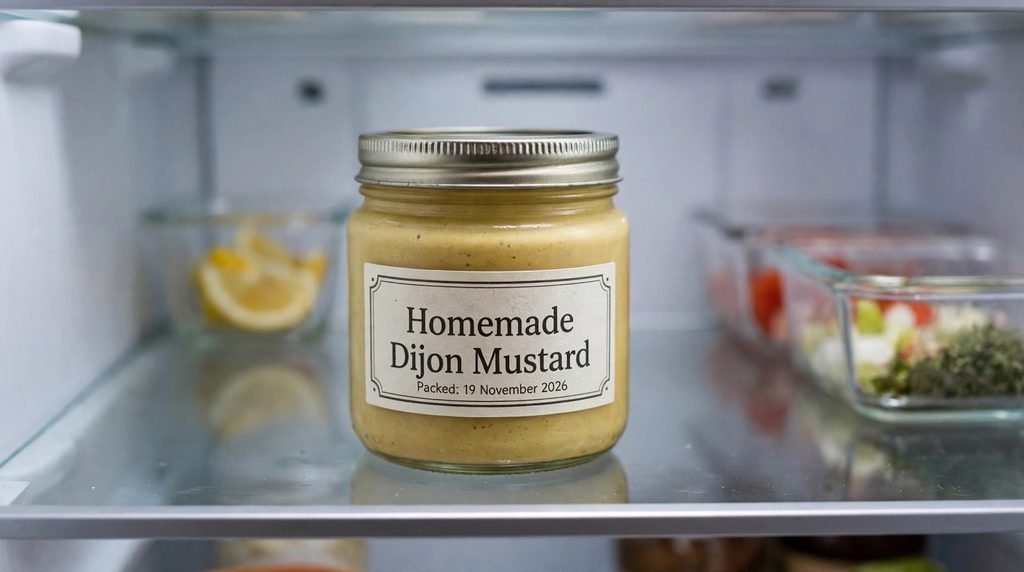
Store your mustard in an airtight glass jar in the fridge. As glass is less likely to absorb scents than plastic, and since we are keeping it cold, the flavour should remain consistent. The wine and vinegar means that your dry mustard powder will last for weeks (often even a couple of months). Put a small piece of sticky note on with the date. To ensure maximum shelf-life, make sure that you use a clean spoon. If there are any bits of food in the spoon, or if you double dip, the shelf life will be reduced.
Over time, some change in texture and appearance may occur. It may be softer, darker and develop a very thin layer of liquid on top. This is perfectly normal. Simply give it a good mix. However, if you notice any mould, bad smell or sour/fermenty smell, throw it away. If you are unsure, better safe than sorry! Simply make a new batch. It only takes 15 minutes!
Ways to Use Your Homemade Dijon Mustard
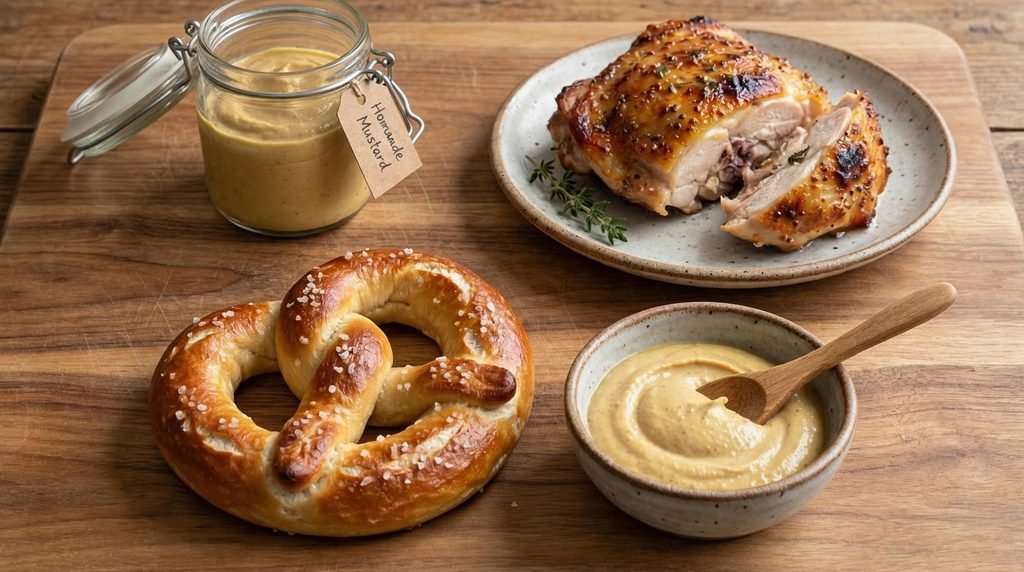
Use this mustard to make a quick dressing by mixing in some olive oil and vinegar. Or, add to a ham sandwich to replace shop bought mustard. Add to the skin of chicken thighs or salmon before roasting to give a sharp, crispy crust. Or add a spoonful to a pan sauce towards the end of cooking. Add sparingly and to taste.
Be inventive! Mix with mayonnaise to make a tasty sandwich filling, or add to potato salad. Or add a spoonful to yolk mixtures to make devilled eggs. Try adding to soft pretzels for a delicious dip. It also makes a thoughtful gift. Simply add to small jars and write a personal label on them to give a homemade pantry item which friends would love!
FAQs About Homemade Dijon Mustard with Dry Mustard Powder
Can You Make Homemade Dijon Mustard with Dry Mustard Powder?
It is quick to make. Whisk together the cooked wine, vinegar, onions and garlic, then mix in with the powder. Store in the fridge to allow the taste to mellow.
Why Is My Homemade Dijon Mustard Bitter?
Allow to sit in the fridge for 2-3 days to get less sharp. If it is still too sharp, add a little bit of honey or a pinch of sugar to balance. Boiling liquid can affect the taste, so be sure to let it cool down.
Do I Have to Use White Wine?
Yes. You can replace with dry vermouth. To make non-alcoholic, you can add more white wine vinegar to water to give a pleasant tartness. Add a little squeeze of lemon. Don’t use sweet wines as it will give a very honey-like flavour. Try tasting the liquid before making the mustard, as this will give a good indication of the overall taste.
How Long Does Homemade Dijon Mustard Last in the Fridge?
If stored in a clean sealed glass jar in the fridge it can last a few months. The wine and vinegar means that it will last longer. Be sure to use a clean utensil when scooping and label with the date. If any mould appears, or a sour / strange odour is apparent, discard.
What’s the Difference Between Dijon and Yellow Mustard?
Dijon mustard has a stronger, more complex and sharp flavour as it is traditionally made with white wine. Yellow mustard is milder. It has a bright yellow colour from the turmeric and a slightly sweeter taste from the vinegar. Dijon mustard works better in dressings, glazes and sauces. Yellow mustard works best with hot dogs and burgers.
Can I Use Mustard Seeds Instead of Powder?
Yes, but takes longer. Soak brown/yellow mustard seeds in the liquid for at least 1 day. Then blend to produce a coarse mustard ( often with a more complex flavour). However, using powder produces a smoother mustard much quicker. If you are short on time, therefore, it may be best to go for a powdered mustard.
Final Thoughts on Homemade Dijon Mustard
This makes a great dry mustard powder which really highlights the difference in the store bought stuff. This recipe couldn’t be easier or cheaper, just leave it to sit in the fridge and adjust with a drizzle of honey or vinegar if required.
Give this a try! Next time you make a sandwich, make a little batch and let me know how you get on in the comments. If you have any friends that still buy the ‘store bought’ version, why not share this recipe with them!