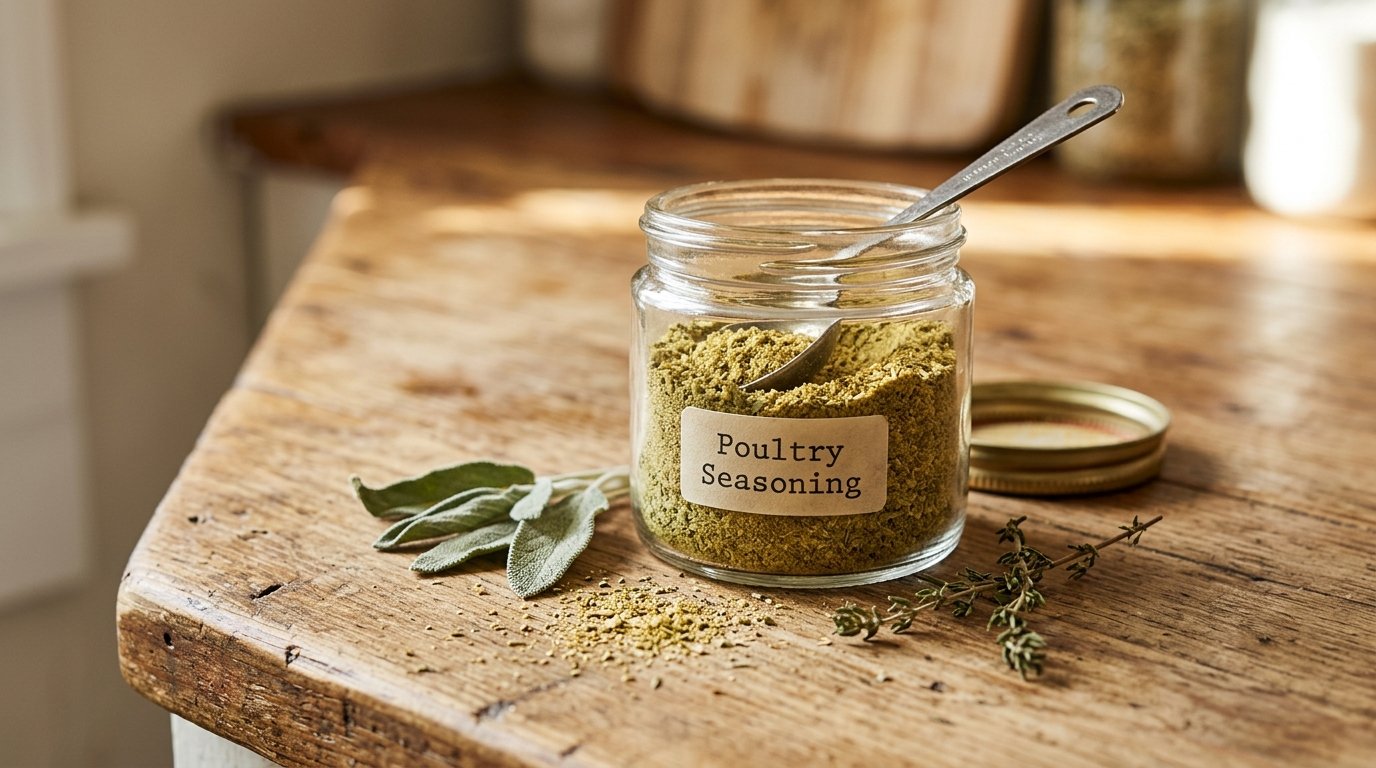
Nailing your homemade poultry seasoning ratio changes how a roast chicken tastes. You’ve probably shaken a store-bought jar over a turkey and ended up with flat, dusty flavor. That’s because those jars often sit on shelves for months while the herbs fade. The fix is simple. Mix your own blend in about five minutes, and you’ll control every herb and every pinch of salt.
In this guide, you’ll get the exact herb amounts for a basic blend, plus a simple way to scale it. We’ll also cover ground versus rubbed herbs and how much to use per pound of meat. You’ll see how to tweak the mix for turkey, chicken, and stuffing, too. Last, you’ll learn how to store it so it stays fragrant for months.
The Best Homemade Poultry Seasoning Ratio
The optimal ratio for making your own poultry seasoning is based on ratios rather than specific measurements. The key ingredient is sage, thyme and marjoram complement it, while rosemary, black pepper, and nutmeg add more flavor to the mixture. This ratio allows one to create both small jars and large amounts of seasoning without recalculation.First, let’s look at the basic blend. Then you’ll see how to scale it.
The Basic Blend Ratio for One Small Jar
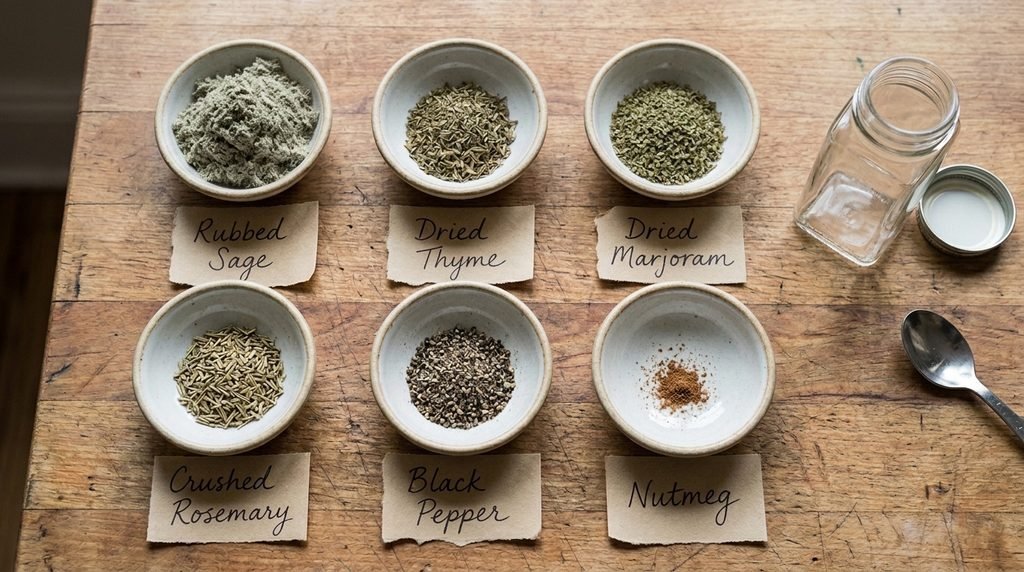
Here’s the blend that works for most kitchens.Mix 4 teaspoons rubbed sage with 2 teaspoons each of dried thyme and marjoram. Then add 1 teaspoon crushed rosemary, 1 teaspoon black pepper, and ½ teaspoon nutmeg. Mix all these ingredients together until the colors are uniform. You will have enough for several weeknight meals at 3½ tablespoons.
How to Scale the Ratio for Bigger Batches
Think of each teaspoon in the basic blend as one “part,” with nutmeg counting as half a part. If you swap in tablespoons, you’ll make about two-thirds of a cup, which is great for gifts or a full season of cooking. Need less? Reduce every number by half while maintaining the same ratio. The taste will remain balanced even in small amounts. Note down the quantities on a Post-it note and paste it on your cabinet door.
What’s Actually in Poultry Seasoning?
Poultry seasoning is a dried herb mix that revolves around sage. The inclusion of thyme and marjoram creates a light floral flavor, whereas rosemary adds pine flavor to the mix. Black pepper will add heat to your poultry seasoning recipe, whereas nutmeg will provide some warmth that is hard to describe. Most commercial products follow the same formula as you would make at home.
Commercial brands include such ingredients as salt, celery seeds, or onion powder. It is an advantage of your homemade product as you are the one who decides what is going into it. Without the addition of salt, you can freely season your food according to its flavor needs. Is there anyone in your family that is concerned about salt intake? Just leave it out.
Ground vs. Rubbed Herbs: How They Change Your Ratio
It’s also important to note that ground and rubbed herbs are different. As rubbed sage is lighter and fluffier, you will need less of the rubbed than the ground – just under 1 teaspoon. The ground sage is heavier and more powdery. If you only have ground, then use around 3/4 of what you would normally use and taste your mix before putting it into your jar.
This applies to thyme and rosemary too. The dried whole leaves are much bulkier so crush them either between your fingers or using a pestle and mortar. Otherwise you will have bits of woody herb in your stuffing. Lastly, check the date on your jars. After a year or two the herbs will lose their flavour and if you have an old jar of sage it can really mess up your ratio.
How to Mix Homemade Poultry Seasoning
This can be made in around 5 minutes, all you need is a bowl, measuring spoon & clean jar. Take care when measuring out the ingredients, crush any large pieces of herbs. The recipe below shows how to make the mix. There are a few additions to make this suitable for turkey, chicken & stuffing. The main recipe will still give you the correct proportions so you won’t need to start again.
Step-by-Step Mixing Method
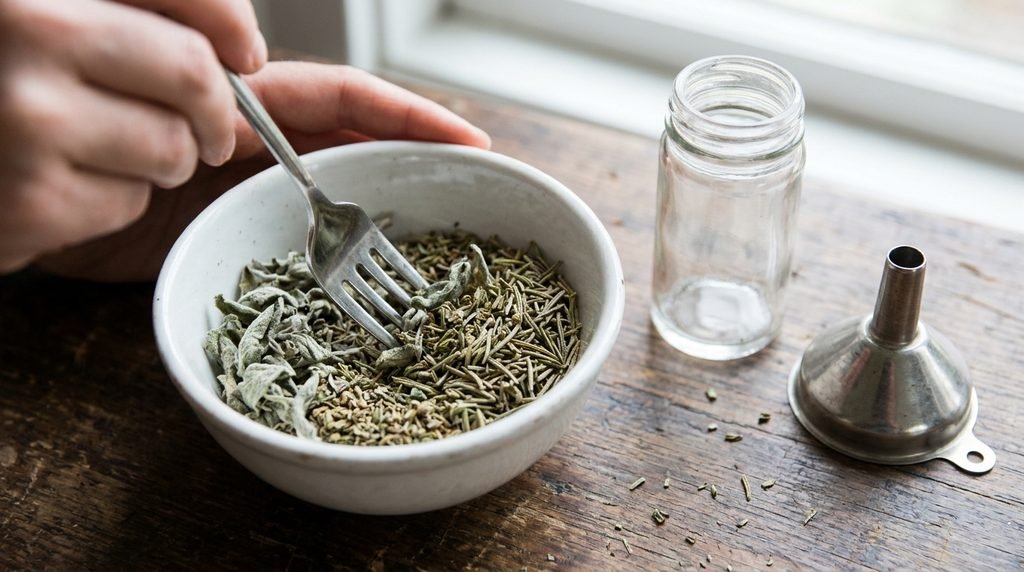
Place the sage, thyme, marjoram, rosemary, pepper and nutmeg in a small bowl. Crush up the rosemary and any whole leaves by rubbing between your fingers. Mix together thoroughly with a fork for 30 seconds. Place the mixture in a dry jar using the funnel or a folded sheet of paper. Close the lid and shake for a few seconds.
Adjusting the Blend for Turkey, Chicken, and Stuffing
This simple mixture will work well with all three, however a few changes will make them perfect. Add an extra ½ tsp of thyme into your mixture for turkey as it is a large bird and can take more herbs. For chicken add a little extra marjoram so it doesn’t become too overpowering and has a touch of sweetness. Stir in ¼ tsp of celery seed to your stuffing for that traditional flavour. I always love to sniff my mixture so make sure you do too as your herbs might be stronger or less strong than mine.
How Much Poultry Seasoning to Use per Pound
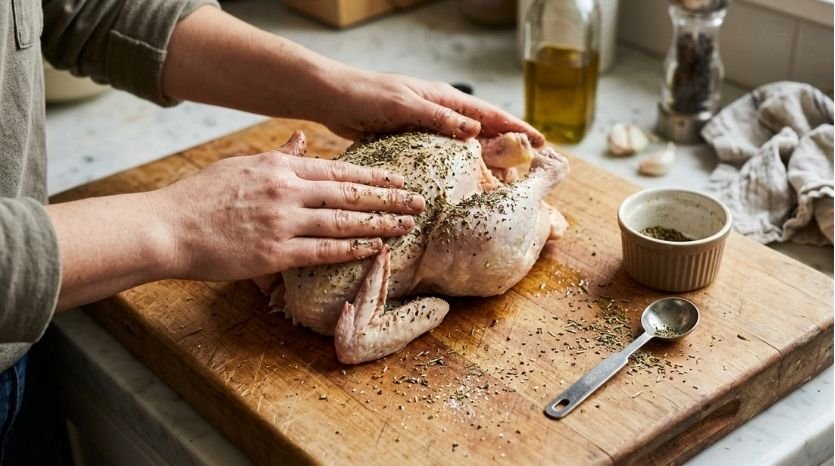
To begin with, we would suggest using around 1 tsp per pound of meat to give enough flavour without overpowering. If you are cooking a 12 pound turkey, you will need approximately 4 tablespoons of the blend. Sprinkle over the skin, inside the cavity and rub into your butter. You will need nearly a whole batch of the basic blend. Chicken thighs will need much less so try weighing it out. Salt will also affect this amount. As there is no salt in our blend, season your meat first with salt then add the herbs. If you have the time leave it overnight by rubbing some onto the meat to allow the flavours to settle into the meat. When making soup, gravy and stuffing we would recommend adding just 1/2 tsp of the blend and tasting it. Add extra in small amounts.
Ratio Mistakes That Ruin the Blend
Using too much sage is definitely the most common mistake with this. Sage is a strong herb so when over used can make your mix quite bitter and almost medicinal. Use the correct amount of sage even if the mixture looks a little ‘bland’ in your jar. Another common mistake is leaving out the nutmeg. This can seem a bit odd but only putting 1/2 tsp of nutmeg will give it that extra warmth to really make it taste like poultry seasoning.
Old herbs will also cause issues. Thyme that has gone off will smell dusty and give you a bland mix. Try not to add any more herbs. Instead just replace the jar. Extra herbs won’t help old herbs. Herbs can also be moist. This makes them clump together and go off quickly. Always use a dry spoon and wipe around the top of the jar before replacing the lid.
How to Store Homemade Poultry Seasoning
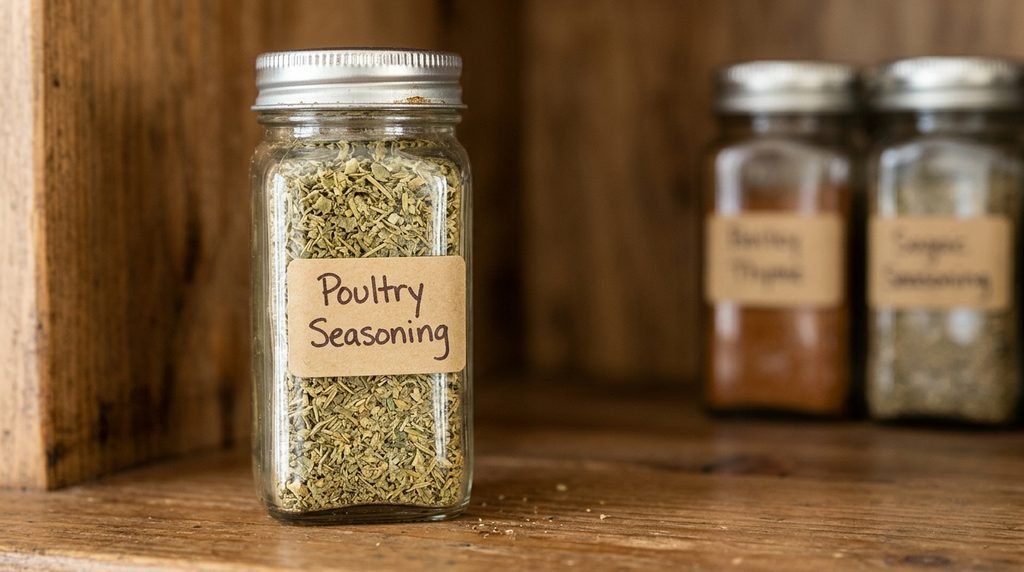
Store your mixture in an airtight glass jar. Glass will not absorb any odours and will protect from moisture. Choose somewhere cool and dark such as a shelf in a pantry or draw to store your mixture. Avoid storing where there is heat such as near a cooker as the oils in your herbs will break down very quickly. Label your jar with the name and date of when you made your mixture.
Your mixture will keep for approximately 6 months. After this you can still use it but the flavour may be slightly weaker. You can check by smelling your mixture occasionally. If it isn’t very strong then it is time to make a new batch. Using smaller jars will also help as you won’t be opening the jar as much. If you have made a double batch divide between two jars and seal the second one until needed.
Homemade Poultry Seasoning Ratio FAQs
What is the best homemade poultry seasoning ratio?
The ideal mixture of the herbs is 4 parts rubbed sage, 2 parts thyme, 2 parts marjoram, 1 part rosemary, 1 part black pepper and half a part nutmeg. The sage is the key herb here. Measuring can be done in any units you like.
Can I use ground sage instead of rubbed sage?
Yes, but you will need less. Ground sage has a much stronger taste, so begin by using three quarters of the amount you would have used if using rubbed sage. Stir the mixture together, get your nose involved and try a pinch of the mixture on some cooked chicken. If the taste seems a bit bland then add a little extra.
How much poultry seasoning should I use per pound of meat?
Use approx 1 tsp per pound of meat. This will just cover the meat with no salt. Salt can be added separately as there is no salt in this blend. For soup or stuffing, start with 1/2 tsp and taste then add a little at a time.
Is poultry seasoning the same as Italian seasoning?
No. Poultry seasoning contains lots of sage, and some thyme, marjoram and a little nutmeg. Italian seasoning contains more basil and oregano. Whilst there are some similar herbs used in both seasonings they will provide different flavours. You could use them as substitutes but your dish would not taste the same.
How long does homemade poultry seasoning last?
The mixture will keep in an airtight glass container in a cool, dark place for around 6 months. It will still be okay to use up to 1 year after making but may have lost some of its flavour. When you go to use it give it a sniff. If the smell is very mild then make up a fresh batch.
What can I use if I don’t have marjoram?
You can substitute with dried oregano or more thyme. If using oregano (a strong relative of marjoram) use 3/4 of the quantity. Thyme can be used in equal amounts. You’ll still get a good balance, but do taste before you put into jars.
Final Thoughts on Homemade Poultry Seasoning Ratio
This is the perfect amount of homemade poultry seasoning. I have used sage as the main ingredient. Thyme and marjoram are also included. Finally, I add some rosemary, pepper and a pinch of nutmeg. This can be used again and again.
Give it a go! Create a small jar of this seasoning mixture tonight and rub onto your next roast chicken. Try it out and make a few notes about what you would change. Save them for when you make your Thanksgiving meal. If you have any questions, or want to make any changes to your mixture, leave a comment below! Share this post with someone who still buys their seasoning from the shops.