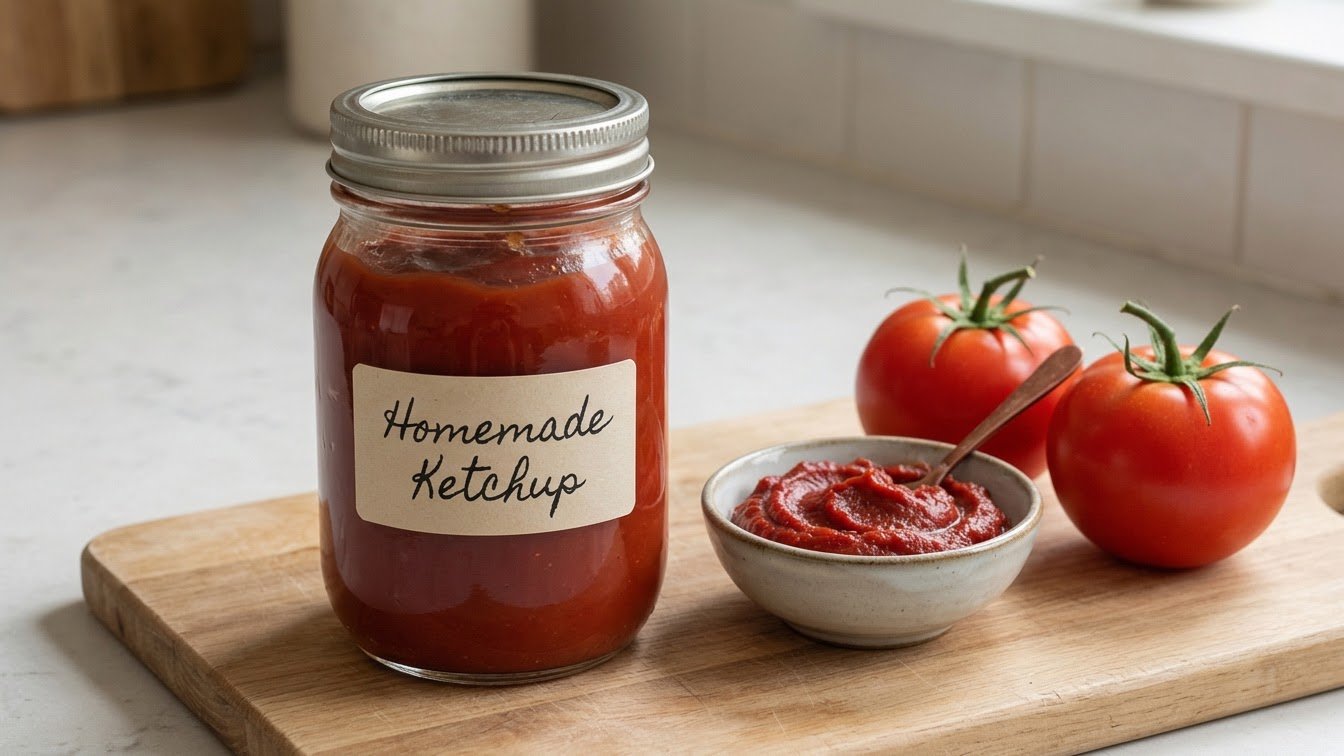
If you are looking to make homemade ketchup using either paste or fresh tomatoes, there are strong views on which is better. Whilst some people swear by using paste, others will only use fresh ripe summer tomatoes. However, whatever method you choose, you can achieve a delicious, thick ketchup (without unwanted corn syrup or unknown ingredients). Both methods work well, and depend on what resources and timescales you have available.
You can see how easy, cheap and delicious you can make ketchup from paste and fresh tomatoes. A recipe is given for both ketchups. We have also provided a quick ‘hack’ for making a combined ketchup from fresh tomatoes and paste so that you can get the best of both worlds. If your ketchup is too runny or too sour, there is advice on how to fix it. Finally, we have shown how long the ketchup will last in both your fridge and freezer.
What Is Homemade Ketchup and Why Make It Yourself?
This homemade ketchup contains only a few ingredients, making it very simple! You have full control over what is in the ketchup. As there is no unnecessary fillers, many ingredients or added sweetness, it has a much more fresh and tomatoey taste than store bought versions.
You have full control over how much sugar/salt you are using, perfect if you are trying to reduce. It doesn’t contain high fructose corn syrup like many shop bought options. This makes 1 batch of ketchup which you can use as a condiment for burgers, fries and glaze for meatloaves all week. Simply change the level of sour and spicy to suit the taste of everyone in your household.
Homemade Ketchup Recipe: Paste vs Fresh at a Glance
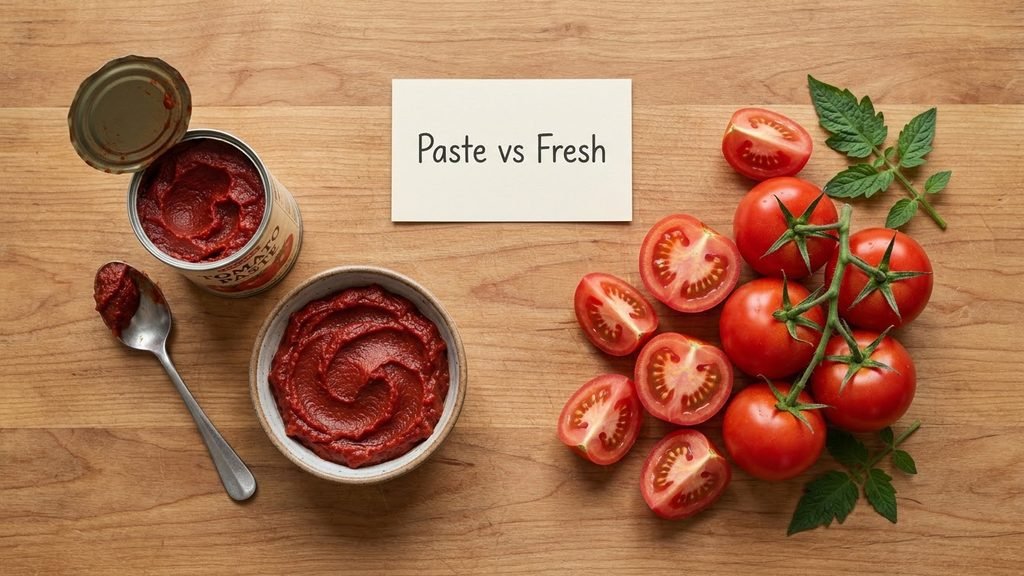
Either way, you will have a rich spicy red sauce. However, the sauce made using the tomato paste method will be made quickly. On the other hand, the tomato sauce will taste less strong. The table below shows which option would be better depending on taste, time and cost.
Flavor and Texture
The ketchup made from tomato paste has a full, slightly sweet taste. It has a thick smooth consistency. Ketchup made from fresh tomatoes has a lighter flavour and more of a tomato taste. As fresh tomatoes contain a lot of water, you need to cook it down a fair bit to make it thick. If you strain it, it will have a smooth texture.
Time and Effort
Paste is quick to make. Simply add everything to a pan, bring to a simmer and leave to cook for 20-30 minutes. Whereas fresh tomatoes will take around 2 hours (including washing, chopping, cooking and usually straining), most of this time is simply leaving to cook. As such, paste is very quick to make if you are short on time during a busy evening. Overall it is very easy to make.
Cost and Season
Tins are great to store in pantries and can be used multiple times. Fresh tomatoes can be expensive and not very nice in winter. However, if you grow a lot of tomatoes or buy a lot from Farmers Markets during peak season, they may be the cheapest option. If you are growing your own, then fresh tomatoes will be very cheap!
Ingredients for Homemade Ketchup
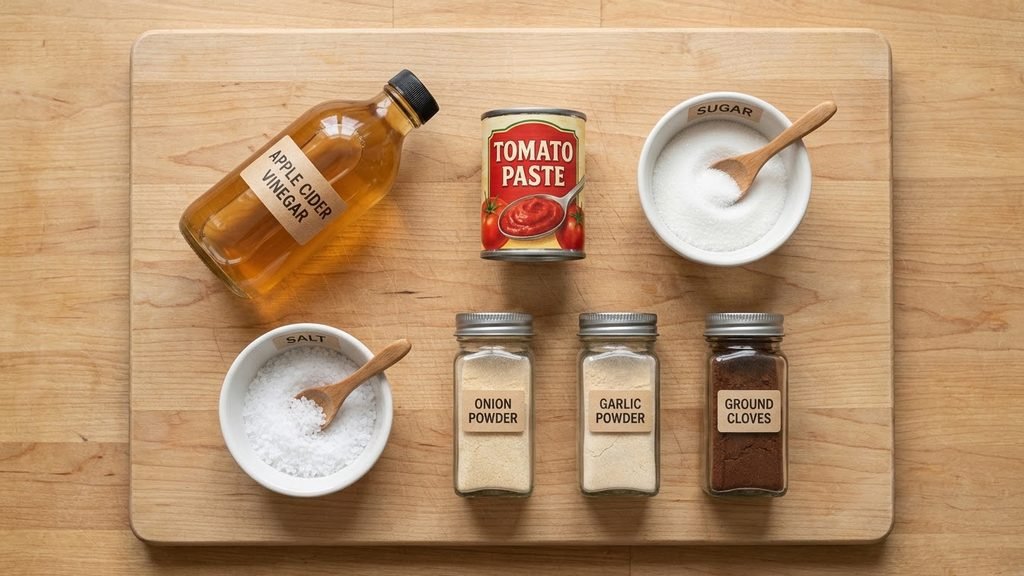
Few ingredients needed. Both recipes are made with the same ingredients – vinegar, sweetener, salt, and a few different spices. The difference between the two is just the type of tomato used. This makes it very versatile; you can buy everything in bulk once, and make both recipes throughout the year. In fact, most of the swaps will work in both recipes.
Pantry Basics for Both Methods
You can make this either with 1 6 oz tin of tomato paste, or with around 3 lbs of ripe tomatoes. Add some apple cider vinegar, a couple of tablespoons of sugar (or maple syrup), and salt. Mix in onion powder, garlic powder, and a pinch of ground cloves. These spices create that traditional ketchup flavour.
Vinegar, Sweetener and Spice Swaps
Substitute to taste. Using white vinegar will create a sharper sauce. Apple Cider vinegar will give a sweeter, fruity note. Sugar, honey and Maple syrup can all be used. Honey and maple will add extra flavour. Add a little at a time if you would like less sugar. Add a little smoked paprika or cayenne pepper to give an interesting twist to the basic sauce.
How to Make Homemade Ketchup With Tomato Paste
Quick and can be made at any time of year. Just 1 pan and a whisk. Can be cooked in 30 minutes. No dicing, no peeling and no sieving. As the paste is thick and concentrated, it makes a balanced sauce very quickly. This recipe can be made in just under an hour and gives you a jar of ketchup ready to eat with your meal.
Whisk and Simmer
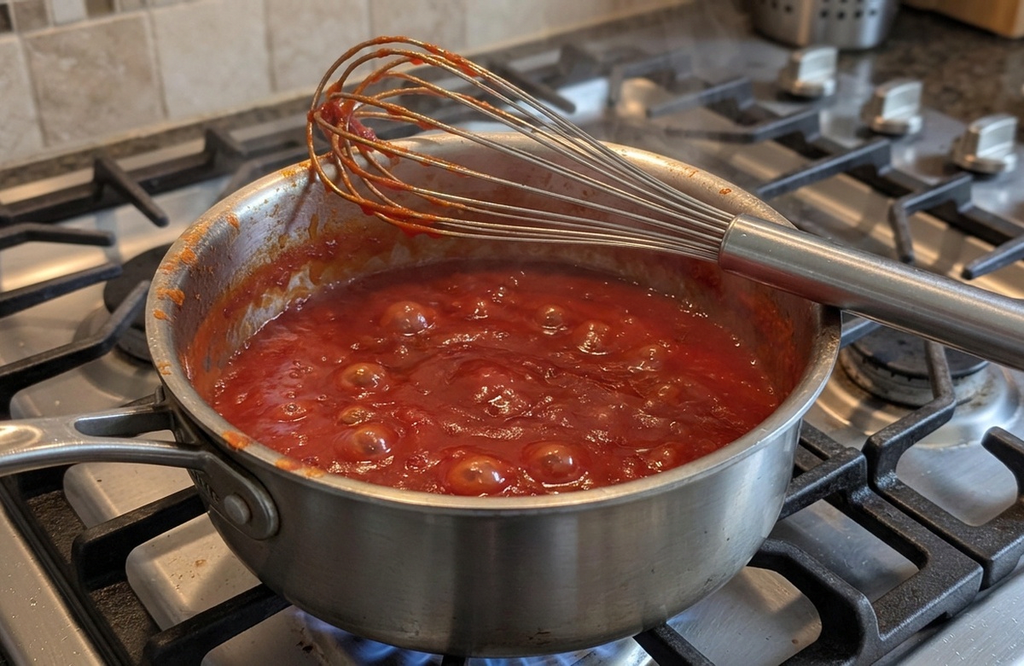
Stir in the tomatoes, 1/2 cup of water, and 1/4 cup cider vinegar. Add in 3 tablespoons of sugar, salt and spices. Stir well. Place on medium heat and bring to a gentle simmer. Turn down to a low simmer and cook for 15-20 minutes. Stir regularly. The mixture will thicken and darken. Be careful as it may spit.
Cool, Taste and Adjust
Leave to cool slightly. If it is not tasting right, add a little white wine vinegar to reduce the sweetness, or some sugar to make it less sour. If it is too thick, add a spoonful of water and mix well. When it has cooled to room temperature, transfer to sterilised jars and put in the fridge to mature overnight.
How to Make Ketchup From Fresh Tomatoes
Homemade tomato ketchup requires patience. Cook the tomatoes, and strain out the skins and seeds. Simmer down into a thick consistency. Although most of this cooking can be left to simmer, you should allow around 2 hours cooking. A large pan will help the water to evaporate more quickly. Towards the end of cooking, keep an eye on the mixture to avoid burning when it becomes very thick.
Pick the Right Tomatoes
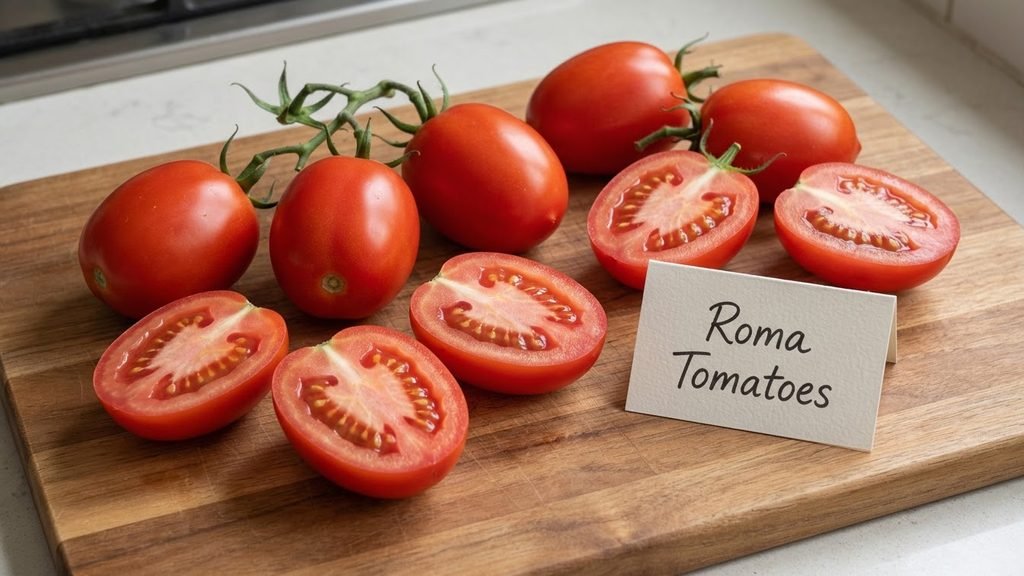
To make ketchup, it is best to use Roma (plum) tomatoes. These have less water and seeds than other slicing tomatoes, and so produce a thicker sauce. If very ripe, they will be perfect. A few soft areas are okay in the tomatoes but do not include any mouldy ones. Remove the cores and any bad areas using a small knife. Chop the tomatoes roughly ready to blend and strain.
Cook Down and Strain
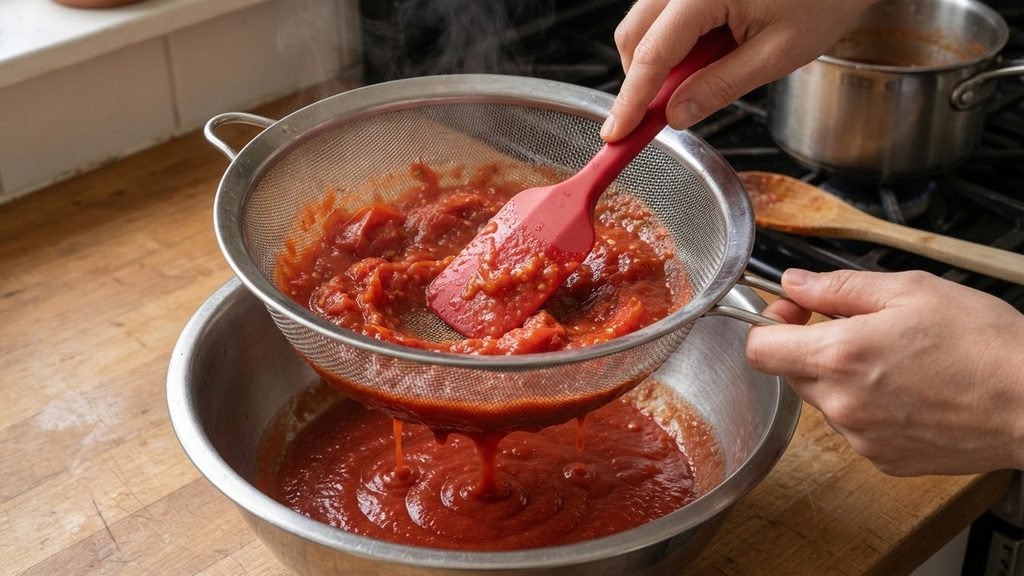
Simmer the chopped tomatoes over a medium heat for around 30 minutes, or until softened. Using an immersion blender, blend down the tomatoes. Pass the blended tomatoes in a fine sieve to remove any skin/seed, resulting in a smooth ketchup (don’t skip this step, this is what will give your homemade ketchup that smooth shop bought consistency).
Simmer Until Thick
Stir in the vinegar, caster sugar, salt and spices, and simmer gently for an hour or longer (depending on pot and tomatoes) and until thick and dark red. To test if it is ready, drag a spoon through the surface and it should leave a clean line. When cool, it will thicken further so do not overcook.
Can You Mix Tomato Paste and Fresh Tomatoes?
This is a great way to make ketchup at home. Adding a couple of tablespoons of tomato paste to the sauce as it cooks will give it a more intense colour and body, allowing it to thicken quickly. However, you’ll still get the fresh tomato taste. If you have very wet or unripe tomatoes, this is a good solution.
If you do not have very many tomatoes (perhaps just a pound or 2), adding some paste will increase the amount to make it worthwhile. Be sure to taste as you go along, as adding too much paste may make the ketchup very sweet and rich. If this is the case, add some vinegar or salt to balance the taste.
Fixing Homemade Ketchup That’s Too Thin, Tart or Sweet
If your ketchup is runny (particularly if you have used fresh tomatoes), simply continue to cook it very gently, stirring regularly, to reduce some of the water. However, ketchup will thicken as it cools, so try putting a spoon of ketchup onto a cold plate to see how it sets. In a rush, you can add a tbsp of tomato puree and cook for another 5 mins to give your ketchup more body.
If it needs to be less acidic add in 1 teaspoon of sugar or maple syrup. If it needs to be less sweet then try adding some vinegar or a pinch of salt. Make any changes carefully and then take another spoonful of ketchup to taste. Since the ketchup will mature over time you may want to leave it to cool down before making significant changes.
How to Store Homemade Ketchup
If it is too thin (especially if using fresh tomatoes) gently cook for a little longer, stirring occasionally, to get rid of some of the water. Ketchup will also thicken when it cools down, so try placing a teaspoon on a cold plate to see how thick it is. If you are in a hurry, you could add a tablespoon of tomato purée and cook for an additional 5 minutes.
To adjust the taste: If it is too sour, add one teaspoon of sugar or maple syrup. If it is too sweet, you can add a little vinegar or a pinch of salt. If adjusting, do so gradually and taste a new amount of ketchup. As the ketchup will become less intense as it cools, you may want to let it cool down a little before making major changes.
Refrigerator Storage
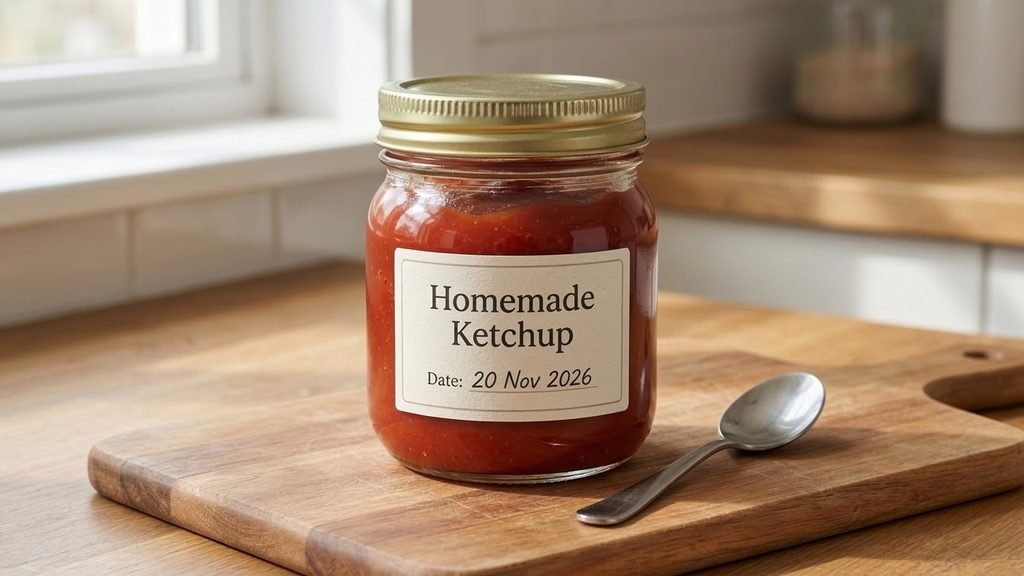
Transfer your cooled ketchup to a clean, sealable jar. Store in the refrigerator. It is best to make small batches of homemade ketchup, as they will last 2-3 weeks. Make sure to use a clean spoon to add to the jar to avoid any fast spoiling due to crumbs getting in or double dipping. If it has developed mold, smells odd, or if it is bubbling, then discard. If unsure, simply discard.
Freezing Ketchup
Ketchup can be frozen. Spoon into a container that can go in the freezer, making sure to leave approximately 1cm of space in the top. Alternatively, you could put it into ice cube tray and then transfer to freezer bag. To defrost, leave in the fridge overnight. It may have separated slightly so make sure to give it a good stir. For best taste, eat within 3 months.
A Note on Canning
Ketchup can be preserved by canning. However, you must ensure that it has the correct acidity level to be safely canned. This recipe has not been tested for canning. Please do not water bath can this recipe. To make shelf stable ketchup, use one of the tested recipes from the National Center for Home Food Preservation. If using this recipe, please store it in the refrigerator or freezer.
Ways to Use Homemade Ketchup

Use this ketchup in burgers, as a glaze on meatloaves, or to give some sweetness and tang to baked beans. Or simply as a dip for baked chicken tenders or roasted potatoes. Spread in a thick layer and cook under the grill for a sweet glaze.
Make other sauces by combining with other ingredients. Simply combine 1:1 with mayonnaise to make a quick fry sauce. Or add some horseradish to make a cocktail dip. Add some hot sauce and a drizzle of honey to make a quick barbecue sauce. A couple of teaspoons in chilli or sloppy joes will add a nice thickness. As you have made the ketchup yourself, you can easily tailor the spiciness of the ketchup depending on the recipe.
FAQs About Homemade Ketchup Recipe Paste vs Fresh
Which Is Better in a Homemade Ketchup Recipe: Paste vs Fresh?
It depends. For speed and cost, tomato paste is a better option. Using fresh tomatoes will result in a lighter and fresher tasting ketchup, but takes a little longer to make. To get the benefits of both, simply mix a spoonful of paste with fresh tomatoes.
Can I Use Canned Tomatoes Instead of Fresh?
Yes. Canned whole or crushed tomatoes can be used. As they have been picked when ripe they are very soft. If your sauce looks too runny, drain off any excess liquid. Cook in the same way as if using fresh tomatoes. If possible avoid tomato sauces with added flavourings or sugars as these could affect the taste.
How Long Does Homemade Ketchup Last in the Fridge?
Yes. Spoon cooled ketchup into a suitable container for freezing and allow 1 inch of space at the top of the container. Alternatively, you can freeze the ketchup in ice cube trays. Thaw overnight in the fridge and give a good stir. The ketchup may look a little split, however this can easily be improved by stirring.
Why Is My Homemade Ketchup Watery?
Generally, just leave to cook for longer. As fresh tomatoes contain a lot of liquid, leave it to gently simmer until a ‘clean’ line is made in the sauce with a spoon. Similarly to this, as ketchup cools it becomes thicker. If you are pressed for time, add in 1 tablespoon of tomato paste and simmer for a further 5 minutes.
Can I Can Homemade Ketchup?
No. To safely preserve food in tins, it needs to have specific levels of acid. This recipe has not been tested for safe water bath preserving. To make shelf stable ketchup use a tested recipe from the National Center for Home Food Preservation. Alternatively, store this ketchup in the fridge or freezer.
Final Thoughts on Homemade Ketchup: Paste vs Fresh
Choose between the paste and fresh recipes depending on how much time you have. The paste will give you a thicker, more tangy ketchup quickly in 30 mins. The fresh ketchup will give you a lighter more vibrant ketchup, but takes longer to prepare. If you can’t choose, why not try the combined option?
Try one of these recipes (small batch) this week. Try adjusting the amount of vinegar and sugar to suit your taste and note down any changes that you make. Leave me a comment to let me know which option worked best in your kitchen. Why not share with a friend who has had enough of shop bought ketchup?