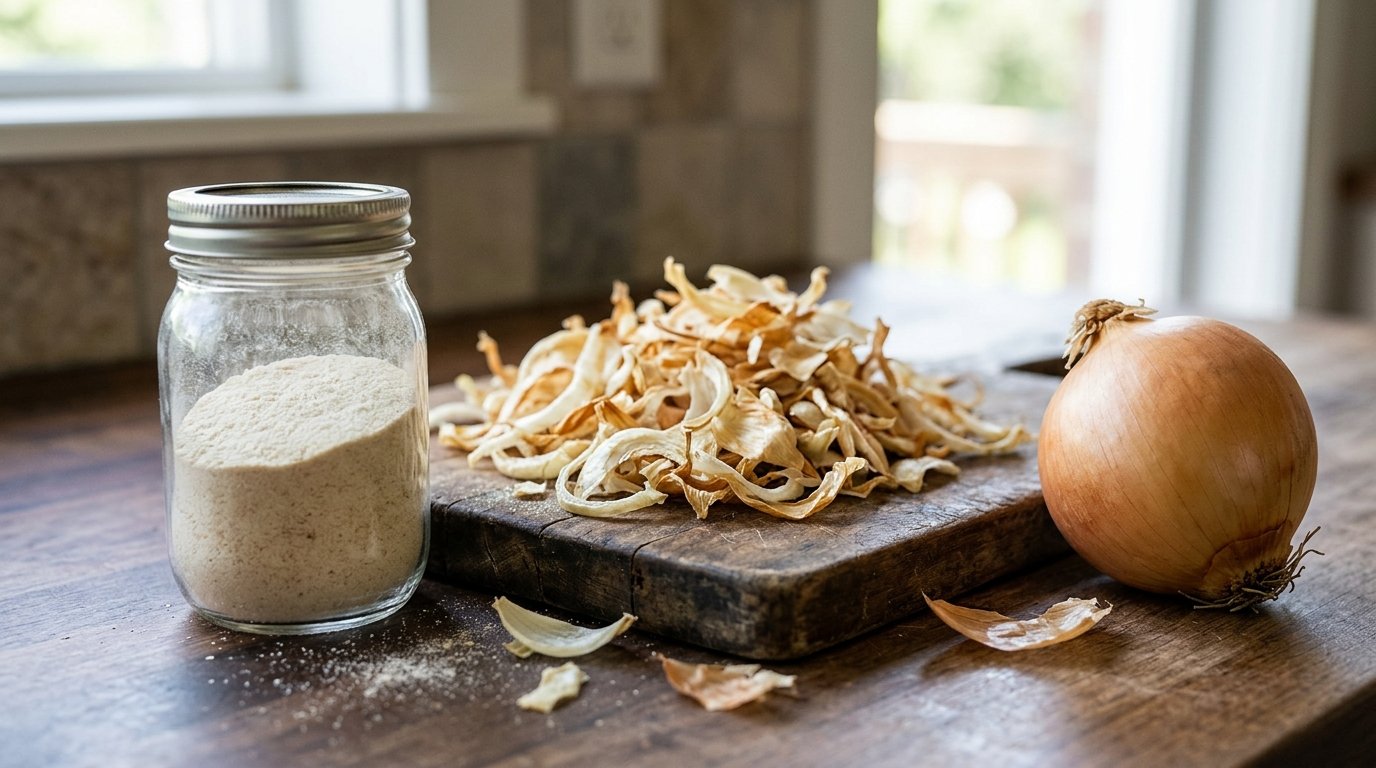
Saving your sprouted bag of onions is easy with this homemade onion powder recipe. Not only can you save your onions from being thrown away, but you will end up with a seasoning with more of a fresh taste than most store bought jars. It is also very affordable. Just a few onions will give you a seasoning that you can keep in your pantry for months. This recipe does not contain any anti-caking agents or unknown filler ingredients.
In this tutorial I show you what types of onions work best, and how to slice and dehydrate them. Then I show you how to grind them to create a fine powder. I then show you how to store your onion powder to keep it dry and free from clumping. Plus some tips on how to avoid a bitter taste and clumpy powder. Finally I show you some easy ways to use your onion powder. You can use an oven or dehydrator.
Why Make Onion Powder From Fresh Onions at Home?
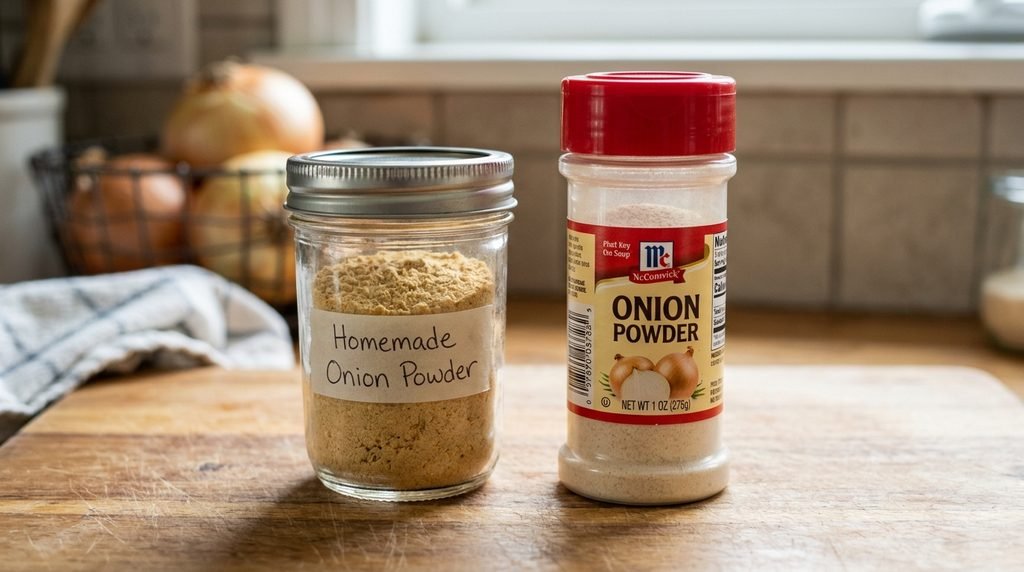
While store bought onion powder will do, it can be a bit bland. Since onion powder is a shelf staple it can lose its flavour over time. When making it from fresh onions you can really tell the difference! It has a sweet savoury aroma and the powder itself can be quite potent so you really only need to use a little. You also know exactly what has gone into your jar.
On the plus side it’s a great way to reduce food waste. If you have onions that have started to sprout or going off simply put them in the dehydrator or oven. Just avoid any onions that are mouldy, soggy or have a sour smell. Buying a large bag when they’re on offer means you get more for your money. One bag can be used to fill many jars. Once you’ve made a batch you’ll have enough to use in lots of spice mixes, soups and dressings.
Best Onions for Homemade Onion Powder
You can use almost any dry bulb onion, however the sweetness, sharpness and colour will affect the outcome. Sweet onions will produce a yellow, mild powder. Sharp onions will give you a strong punchy powder. Look for firm onions with dry papery skins, avoid any that are not firm. Avoid any that have any mould or sour smell. If you choose good quality onions it will make your life easier.
Yellow, White, or Red Onions
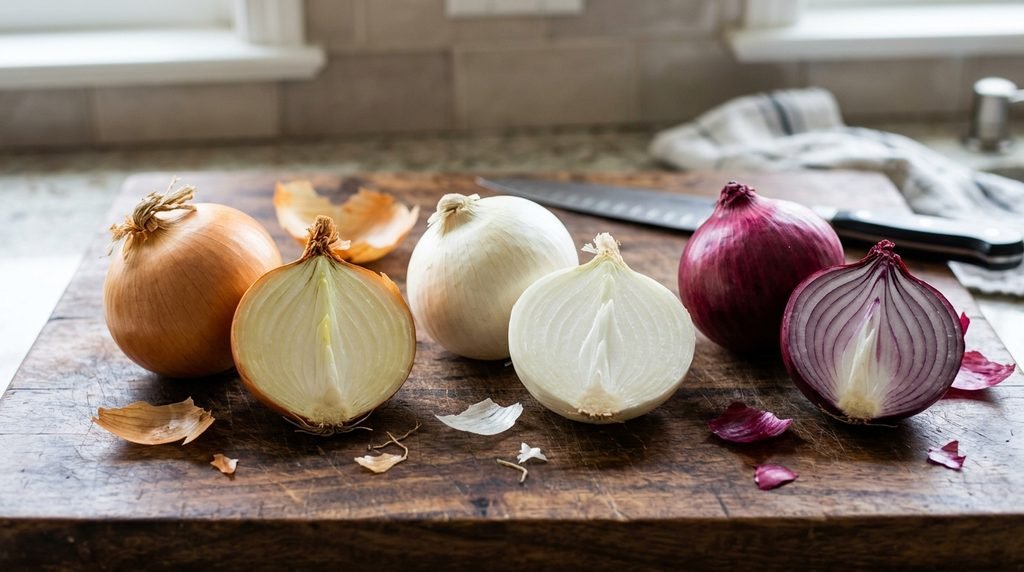
Yellow onions are the most versatile option. They taste nice and savoury and will dry into a pale sandy powder. White onions have more of a sharp, clean taste and are great for mexican type recipes and salsa. The red onions add a little sweetness but will lose their colour to a dusty pink/brown when dried. To start off with get some yellow onions and play around with different types!
Can You Use Onion Scraps and Green Tops?
Of course! Just take care to avoid the thick ends of the bulb and any layers just beneath the outer skin. The clean parts will dry beautifully. Tops of scallions or spring onions can be used however they will give you a more delicate green powder, similar to dried chives. They will dry quicker so you will need to keep an eye on them. It’s best to keep these in a separate batch as they don’t blend well together. Don’t use any of the outer skin or any dirty or mouldy items.
What You’ll Need Before You Start
No special equipment required. Just a knife and chopping board. The thinner and even your slices are, the quicker they will dry out. You will also need your dehydrator/oven, some parchment or a baking tray with a wire rack. Something to grind them in (spice grinder, coffee grinder, or high speed blender). And finally somewhere to store them in an airtight glass jar.
It is a good idea to ventilate your kitchen as onion drying can make it quite smelly. Open a window or turn on your range hood. A mandoline can be used to slice your onions quicker and evenly but is not essential. If using one be sure to always use the guard as the blades are very sharp. If using a coffee grinder to grind your powder be sure to clean it out first so that your powder does not have a slight coffee flavour from last weeks coffee.
How to Make Onion Powder From Fresh Onions
There are three steps to dehydrating: preparation, dehydration and checking if the onions are ready. There’s also grinding. Most of the time you’ll be waiting. The onions will slowly cook at a low temperature. It can take most of a day so be patient. If you hurry this up by cooking at a high temperature you’ll get burnt onions and a bitter powder.
Peel, Slice, and Drain the Onions
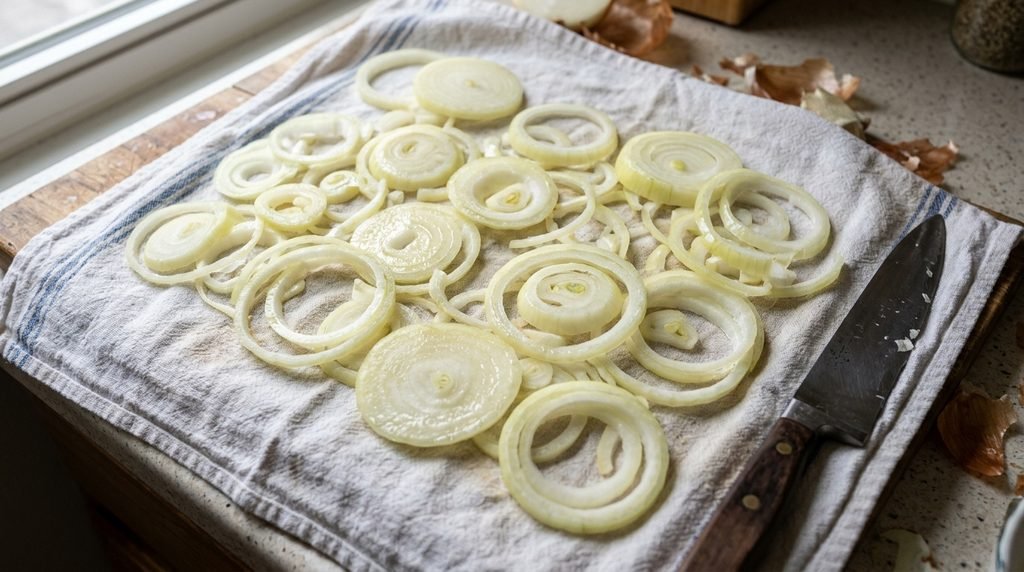
Start by peeling the onions. Cut both ends off and slice them very thinly (around 1/8th of an inch). This will help them to dry. They will produce a lot of liquid so place on a clean tea towel and pat dry. If you separate the onion rings it will help with airflow. Any excess liquid can be saved for adding to your soup or salad dressing.
Dry the Onions in a Dehydrator
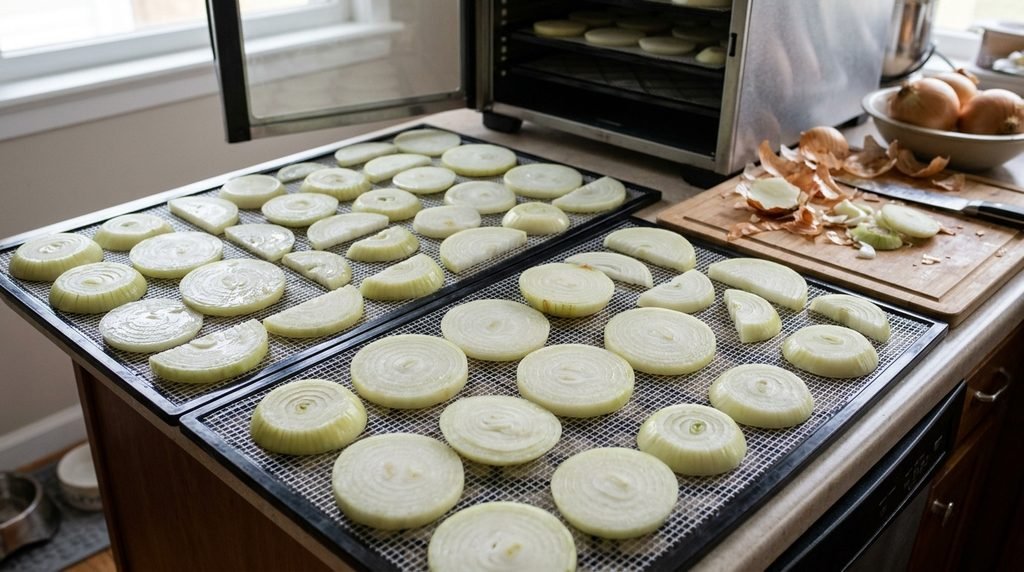
Place your slices in one layer on the trays. Set the temperature of your dehydrator to approximately 125-135F. Dehydrate for around 6-10hrs. Thick slices will take longer. Rotate your trays once or twice so they dehydrate evenly. Don’t overcrowd your slices, as this will cause steam build up and slow the dehydration time. When they snap rather than bend they are ready!
Dry the Onions in the Oven
If you don’t have a dehydrator, your oven will work just fine. Place your baking sheets lined with parchment paper into your oven and bake at the lowest temperature possible (usually 150-170 degrees F). To help moisture escape, prop the door open slightly using a wooden spoon. Cooking time will vary between 4-8 hours so be sure to turn them halfway through cooking. Towards the end of cooking, check frequently as they can easily burn on the edges due to the heat of the oven.
Check That the Slices Are Fully Dry
Take a couple of slices out and let them cool down a bit. The onions will still be quite soft to bend even when almost ready. Check that you can snap through them easily to get a clean break with no chewy/tacky centre. If they are not snapping through then place them back in and cook for an extra hour. Not checking for this is a common reason for getting clumpy powder. Any moisture left in the onion will create a problem by getting trapped in your jar.
Grinding Dried Onions Into Fine Powder
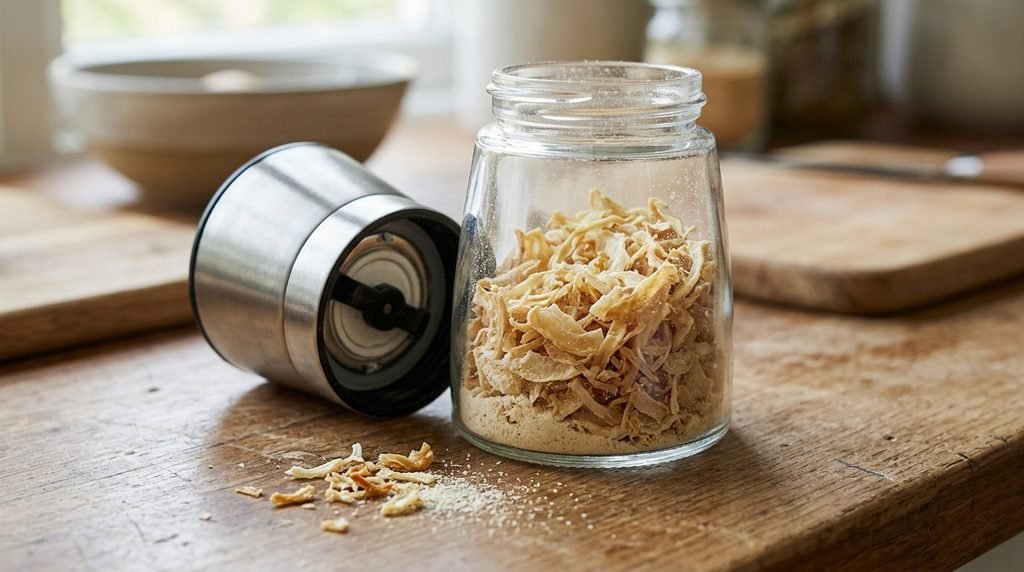
Once you’ve cut into clean slices, allow to fully cool. The steam released by the warm onions will cause clumping. Add a small amount of slices to your spice grinder or blender. Pulse for a few seconds and shake to make the bigger pieces fall back down. Once you’ve done this for around a minute you should have a fine, fragrant powder.
Be careful when removing the lid as the onion dust will rise quickly and irritate your eyes. Sieve through a fine mesh to remove any bigger chunks. If you stop grinding here you’ll get a granulated onion which will still work well but if you continue to grind until it is a fine powder it will blend better.
How to Store Homemade Onion Powder
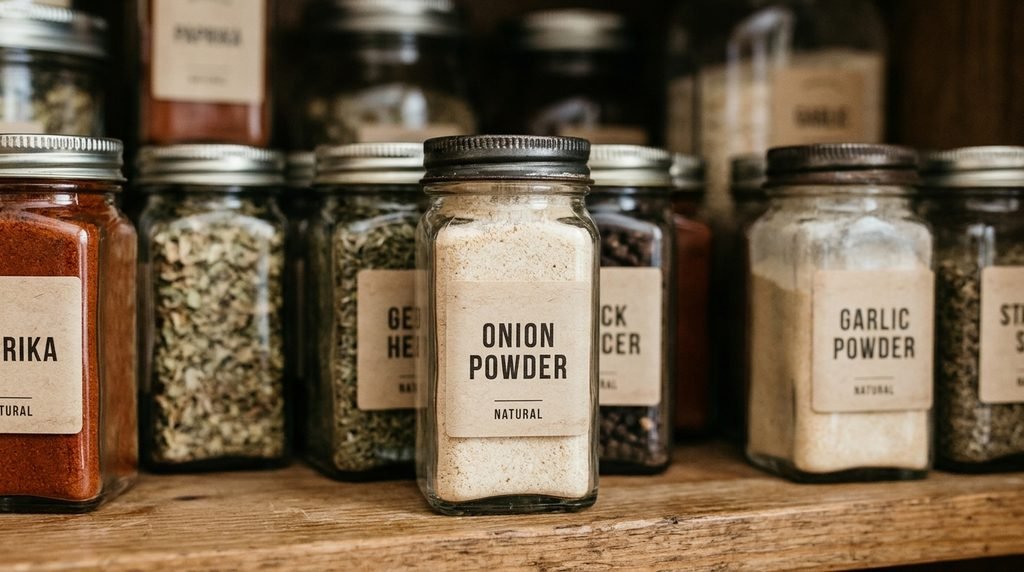
Transfer the cooled powder to a clean, dry airtight jar. Label the jar with the date, as homemade versions of the powder will not have a date printed on them. Store the powder in a cool, dark place such as a cupboard, away from the stove. If the powder is exposed to heat, light, or steam it will reduce the shelf-life of your powder. Always use a small jar so you will get the best tasting powder!
The main problem with your powder will be humidity. If the powder is clumping together that means it has absorbed some humidity. You can add a desiccant packet (food safe) into the jar. For larger quantities keep a spare sealed jar in the freezer. Let it warm up to room temperature to avoid any condensation. Most homemade versions will keep their flavour for several months, however always go by what smells good!
Troubleshooting: Clumps, Bitterness, and Strong Smells
Even experienced cooks can have some issues making your own onion powder! Luckily most issues will be related to moisture and heat. The easiest thing to fix is the strong smell; simply open a window, turn on a fan and make sure your dehydrator is in a well ventilated area. If you are using your oven then turn on the range hood. Below are solutions to the most common issues.
Why Your Onion Powder Clumps
This is usually because the onions were not fully dried out or because the powder has absorbed moisture. To fix this issue, place the lumpy powder onto a baking tray and dry for 30-60 mins on the lowest setting of the oven. Once cooled down completely re-grind and sieve. Next time when making your onion slices let them dry for an extra hour. And also ensure that your jar and grinder are completely dry.
Fixing Brown or Bitter Powder
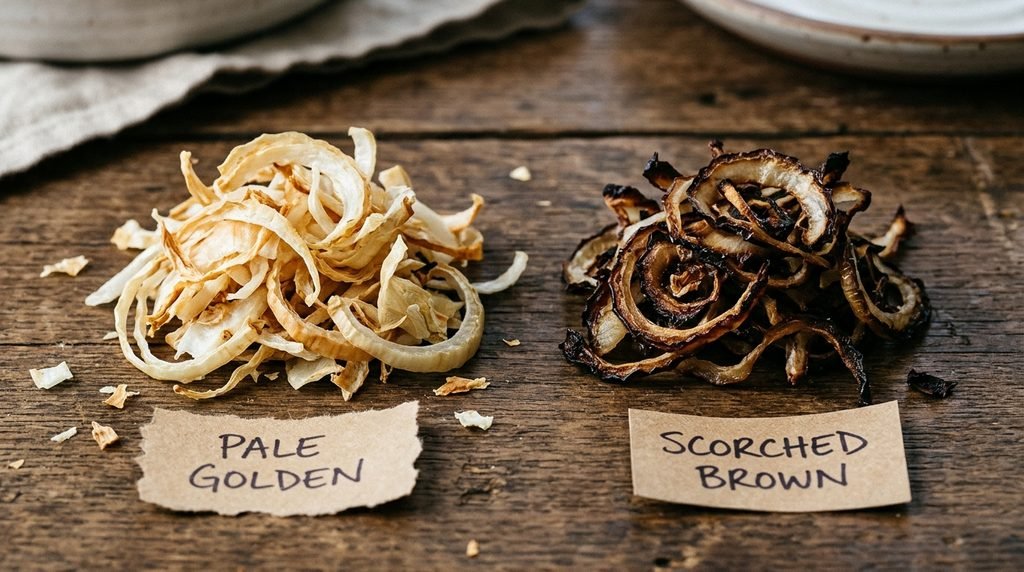
If you’re left with a brown/black powder, it probably went too high. The onions caramelise quickly when cooking at a high temperature and will begin to burn. Reduce the temperature, turn the slices more regularly and check them sooner. Remove any slices that have browned around the edges. Having a light yellow powder is ok, however if they are dark brown they’ll taste burnt and will affect the whole jar.
How Much Powder Does One Onion Make?
Your jar won’t be very big! Fresh onions are largely made up of water which means they will lose a lot of moisture. Depending on the size of your onion you will get a few tablespoons of powder. The thickness of your slices and type of onion will affect how much you get, so drying multiple onions will help. To easily fill a jar simply dry enough onions to fill your dehydrator!
The homemade powder can be quite punchy, so start with a little. As a rough guide you should use around a tablespoon of powder to replace one medium onion. Taste and adjust the amount you use. If using in soups/sauces add it early on so the flavour can infuse. If using in dry rubs add it at the end. Take note of your first batch and you’ll quickly get your ratio spot on!
Easy Ways to Use Your Homemade Onion Powder
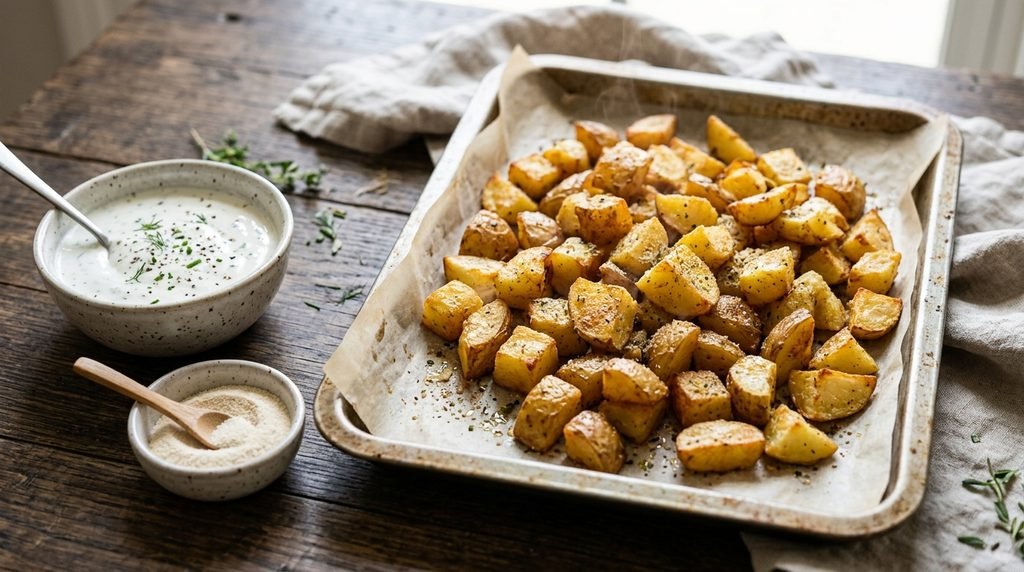
Onion powder is perfect to add to meats such as meatloaves, burger patties or meatballs. It mixes in well. This makes it great to add to creamy dips. Try adding some to your ranch or sour cream dip. You can also sprinkle some on your roast potatoes or fresh popcorn. Due to its fine texture it works well within gravies and sauces.
Combine with garlic powder, paprika and salt to create a seasoning for your chicken or pork. It also works well in taco seasoning or poultry seasoning meaning your jar will be empty quicker than you think! As your powder will be fresh, start by tasting it and add a little at a time. Keep a small shaker on your stove and you will find yourself using it daily.
FAQs About DIY Onion Powder From Fresh Onions
How Long Does It Take to Make DIY Onion Powder From Fresh Onions?
The drying time will depend on how thick the slices are and if you are using an oven or dehydrator. It can take between 4 hours and 10 hours. The preparation takes around 20 minutes and the grinding takes a few minutes. There’s very little hands on work involved so it can easily be done in the morning and ground that evening.
Can I Make Onion Powder Without a Dehydrator?
Yes. This will be done in your oven at the lowest setting (usually between 150 and 170 degrees F). Leave the oven door ajar slightly to let any steam out. Arrange the thinly sliced pieces onto baking sheets lined with parchment paper. Turn halfway through cooking. Cooking time will be between 4-8 hours. Check frequently towards the end of cooking to avoid the edges becoming too browned/tangy.
What’s the Difference Between Onion Powder and Granulated Onion?
Powdered onion is finely ground and granulated onion has a coarser texture. Powdered onion will dissolve easily into your sauces and dips and can be used in rubs. Granulated onion won’t form clumps so is great for dry mixtures. Both can be made using the same dried slices but just by adjusting the time of grinding.
How Long Does Homemade Onion Powder Last?
Homemade onion powder will keep well in an airtight container in a cool, dark cupboard. As long as the onion powder is kept dry it will be good for several months. However, the flavour will go off over time. If you can see any dampness, mould or strange smell then just chuck it. Date your jars.
How Many Onions Do I Need to Fill a Small Jar?
Fresh onions will lose a lot of moisture when dehydrating so you should aim to put around 4-6 medium onions in a small half pint jar. The amount you’ll get will depend on what type you’re using and how thinly you slice them. It’s best to dry one or two full trays at a time.
Is Homemade Onion Powder Stronger Than Store-Bought?
Yes often. The fresh dried onions will have a much stronger taste because they have more of their natural aroma. So start by adding a little less and then taste and add more if needed. How strong the taste is can depend on the type of onion and how long it has been stored for.
Final Thoughts on DIY Onion Powder From Fresh Onions
Onion powder is super straightforward to make at home. Simply thinly slice your onions, dehydrate on a low temperature and then grind them once they are brittle. You’ll end up with a jar of onion powder that smells just like fresh onions, but way cheaper than buying it. Once you’ve made some once it’s super easy to make again.
Why not try it? Get a bag of yellow onions today and make some tonight. Let me know how you got on in the comments below and check out my homemade seasoning recipes.